

We're Paris Antoinette, and we guide families and school groups through the Palais Garnier every week. Opened in 1875, Charles Garnier's palace is one of the most spectacular theaters in the world, and it still hosts operas and ballets. Here's how to make the most of your visit.
Before You Go: 4 Tips for the Paris Opera with Kids
- Check what's open. The Palais Garnier is a working theater. The auditorium sometimes closes to visitors for rehearsals, and other rooms can close for technical reasons. Opening hours are usually 10 a.m. to 5 p.m., with last entry one hour before closing.
- Kids 12 and under get in free. Visitors from outside the European Economic Area, including the U.S., pay €25 for adults and €20 for ages 13 to 25 (as of November 2026). On our tours, admission is included.
- Travel light. There's no luggage storage, so leave big bags at your hotel.
- Your ticket includes the Opera library and museum, with its miniature stage sets. Kids love them.
The Way In: From the Façade to the Grand Staircase
1. The Façade
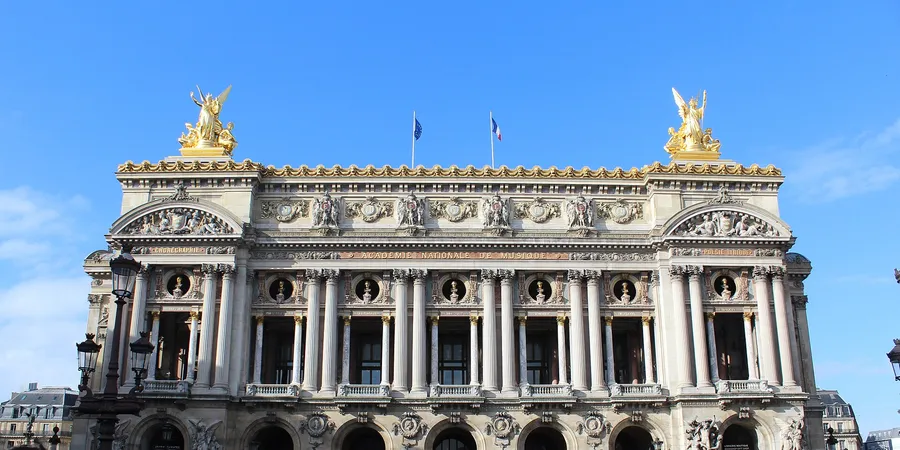
In 1861, Charles Garnier, a nearly unknown 35-year-old architect, won the competition to design a new opera house for Paris. Construction lasted until the grand opening on January 5, 1875. Between the columns of the façade, seven busts of composers look out over the square, including Mozart and Beethoven. At the very top of the roof, Apollo raises a golden lyre.
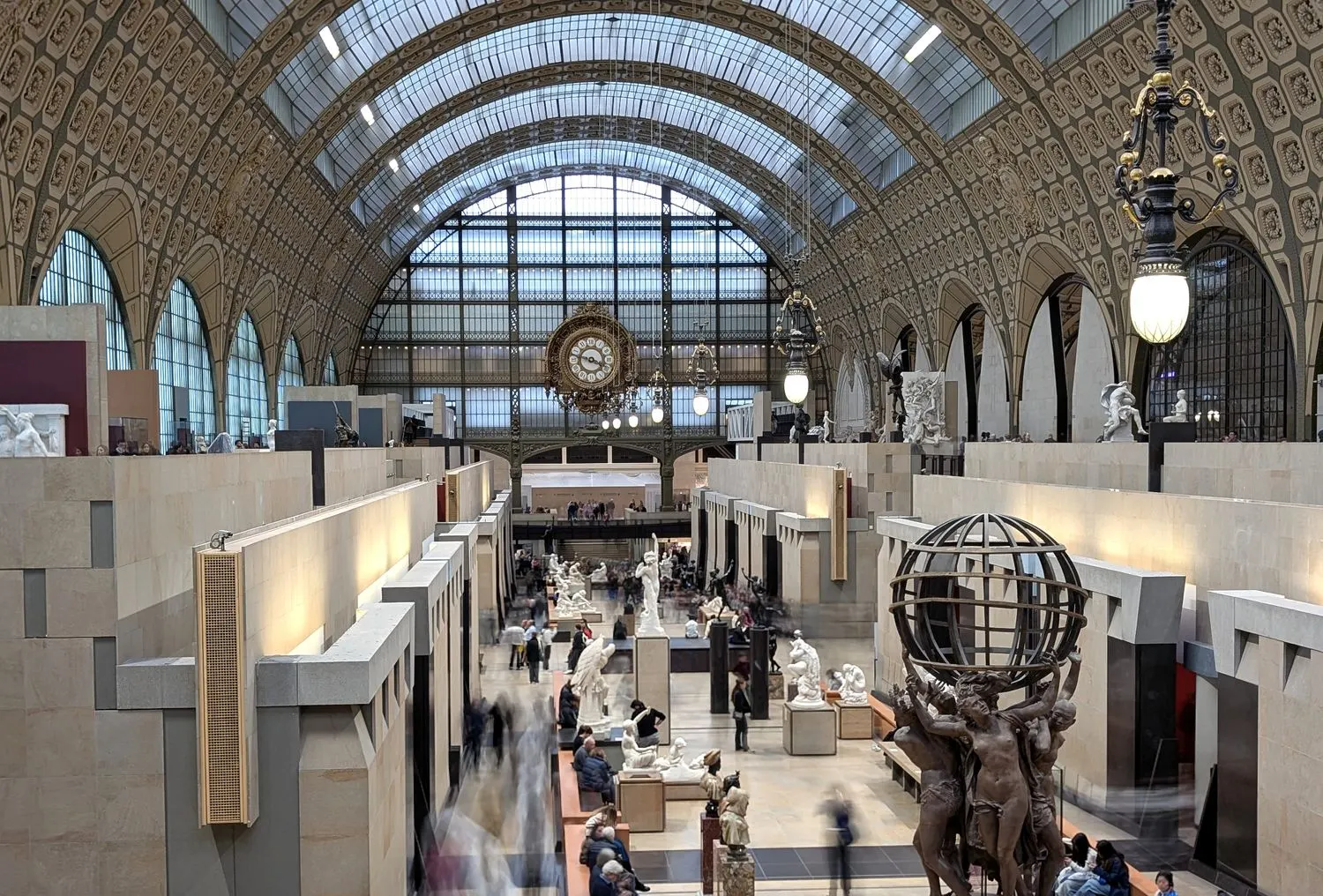
Kid challenge: find Mozart among the busts, then Apollo's lyre on the roof. To the right of the entrance, look at the sculpture called The Dance. It caused a scandal in 1869. The one on the façade is a copy. The original is at the Musée d'Orsay.
Fun fact: legend has it that when Empress Eugénie saw the plans, she frowned: "It's not Greek, or Louis XIV, or even Louis XV!" Garnier answered: "It's Napoleon III!"
2. The Subscribers' Rotunda and Garnier's Signature
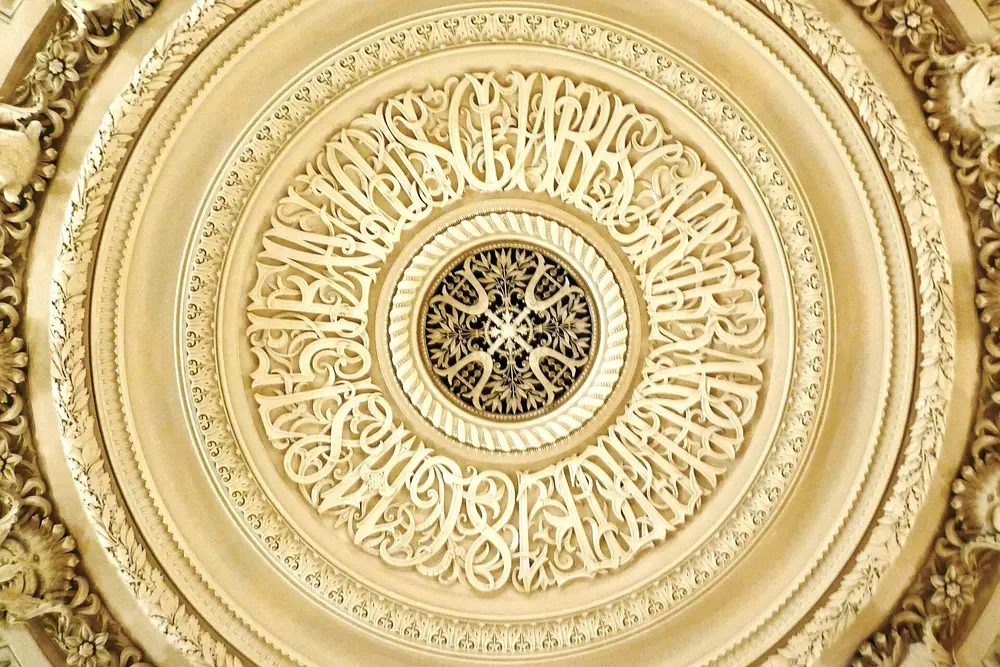
Season ticket holders, who rented their box for the whole season, arrived by horse-drawn carriage through this covered entrance on the side of the building. The ceiling hides a secret: what looks like a decorative pattern is actually the architect's signature. The letters spell out "Jean Louis Charles Garnier" and the years of construction, 1861 to 1875.
Kid challenge: look up. Who can read the name hidden in the ceiling? The letters go around in a circle, so follow them with your eyes.
3. The Pythia Fountain
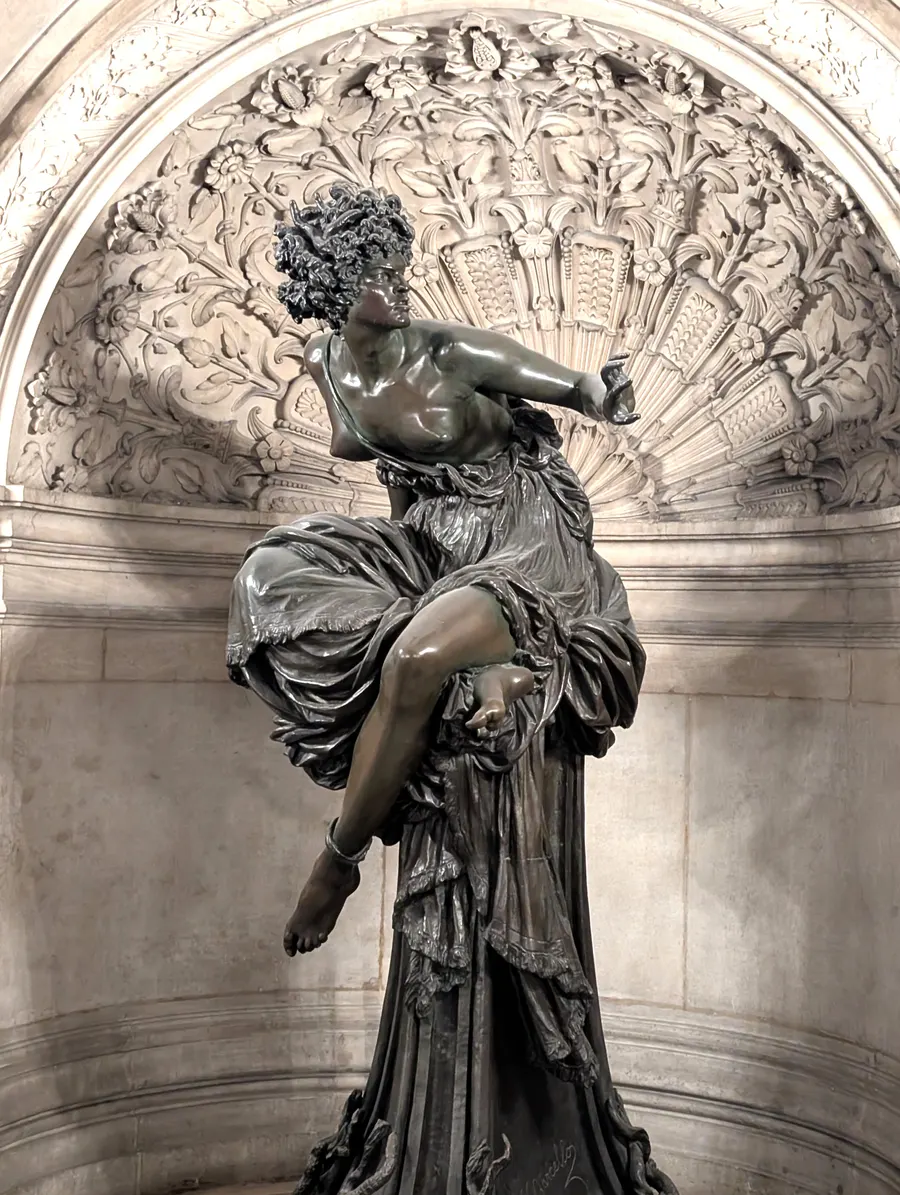
Under the Grand Staircase, above a pool, sits a bronze woman with her arm stretched out. She's the Pythia, the priestess of Apollo who gave prophecies at Delphi, in ancient Greece. The sculpture is signed Marcello, a man's name. But behind that pen name was a woman sculptor, Adèle d'Affry, Duchess of Castiglione-Colonna.
Kid challenge: was this statue made by a man or a woman? Ask before you reveal Marcello's secret. It's a great way to talk about women artists, who rarely got big commissions in the 1800s.
4. The Grand Staircase
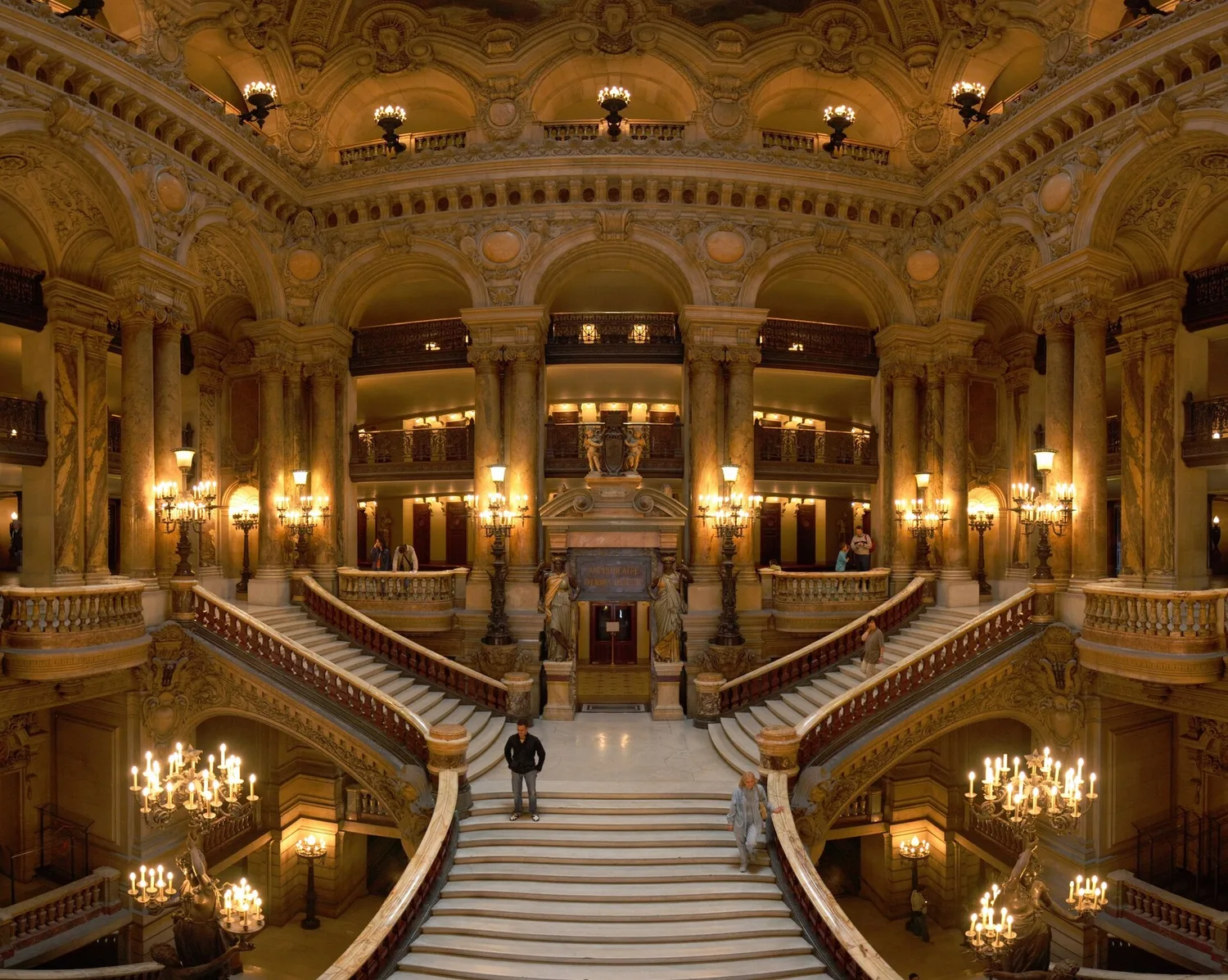
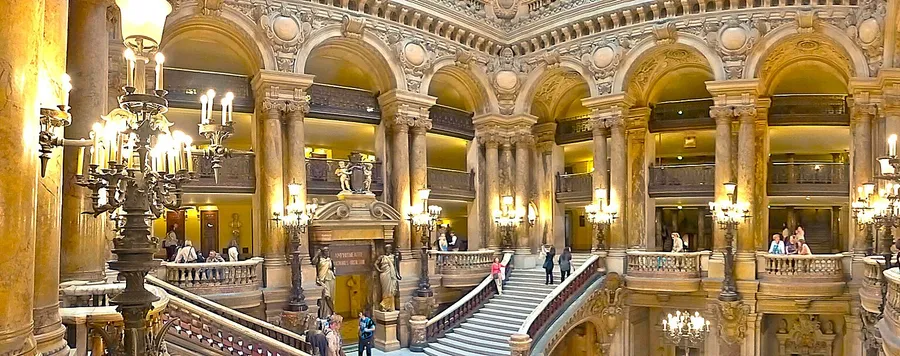
This is the heart of the palace. White marble for the steps, red and green marble for the railings and columns, plus onyx and gilded bronze. Garnier brought in marble from all over France and beyond. The ceiling rises about 100 feet (30 meters). For Garnier, the show started right here. People climbed the staircase to see and be seen.
Kid challenge: count the different colors of marble. Then guess where a fancy theatergoer in 1875 would stop so that everyone could see them. The best view of the whole staircase is from the balconies upstairs.
The Grand Staircase is a highlight of our Secrets of the Opera tour.
5. The Salamander on the Railing
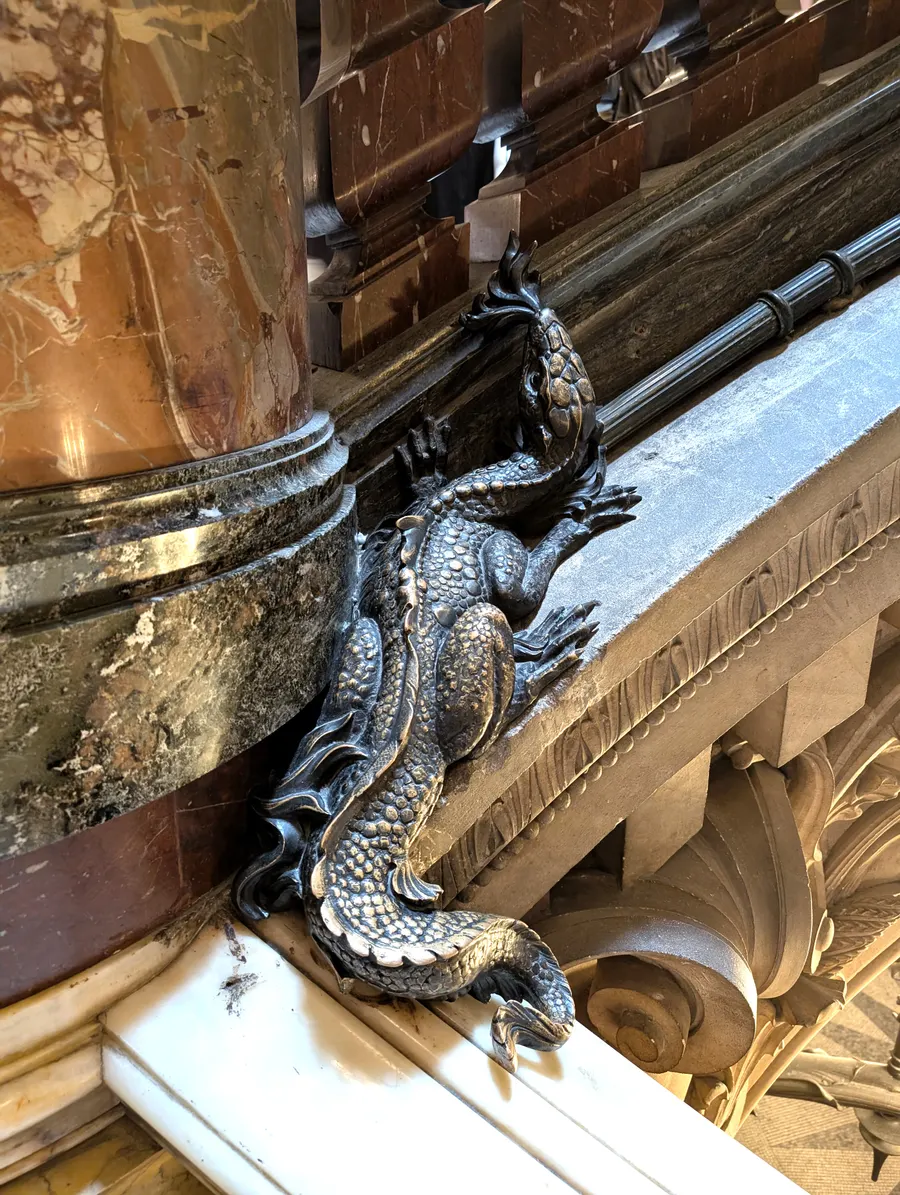
As you climb the first flight of stairs, follow the railing to find a small bronze salamander clinging to it. It isn't just for decoration. It hid a gas pipe that fed the lights, and today electric wires run through it. On the other side of the staircase, there used to be a dragon. Nobody knows when it disappeared, and a copy of the salamander replaced it.
Kid challenge: who can spot the salamander first? Then tell them a dragon once faced it, and make up a story together about what happened to it.
6. The Staircase Ceiling
Above the staircase, four big paintings by Isidore Pils tell stories. One shows Apollo in his chariot. Another tells how the building was born: the City of Paris, sitting on her ship, receives the plans for the new Opera, while Pegasus, the winged horse, rears up behind her.
Kid challenge: find the winged horse, then the ship. Keep that ship in mind: you'll see it again in a minute, above the door on the landing.
7. The Arms of Paris Above the Door
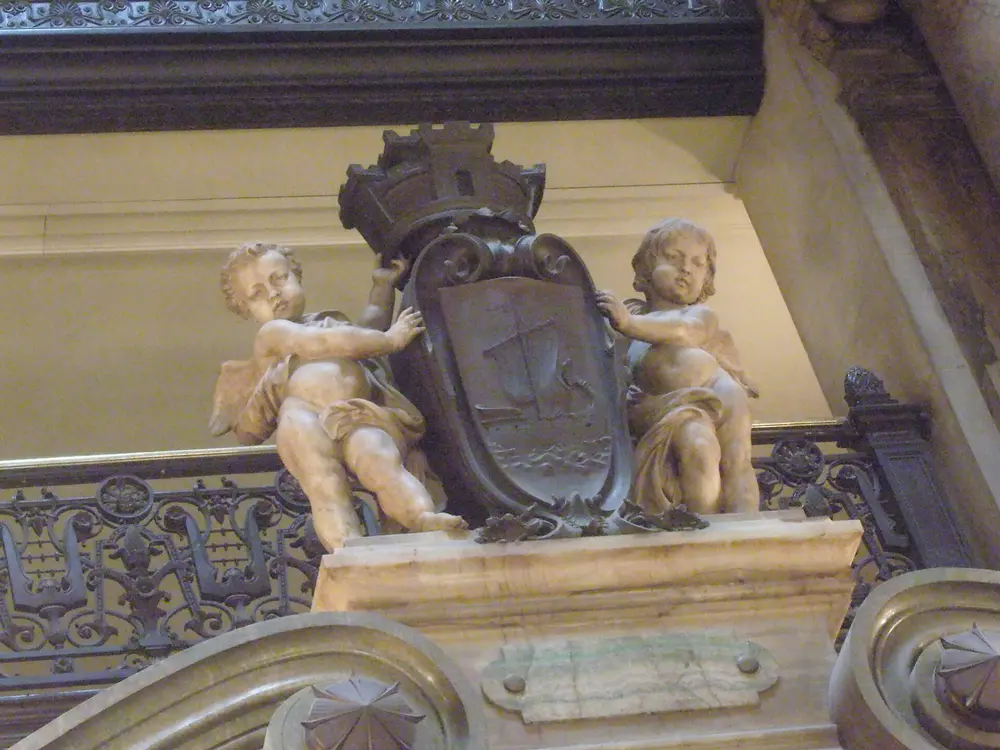
On the first landing, a huge door leads into the auditorium. It's framed by two statues, Comedy and Tragedy. Higher up, two winged children in white marble lean on the coat of arms of the City of Paris, in bronze.
Kid challenge: find the ship on the coat of arms. It's been the symbol of Paris since the Middle Ages, when river merchants shipped their goods along the Seine. Once kids know it, they'll spot it all over the city.
Fun fact: the motto of Paris, Fluctuat nec mergitur, means "Tossed by the waves, but never sunk."
The Auditorium: Red Velvet, Gold, and a Phantom
8. The Red and Gold Auditorium and Its Chandelier
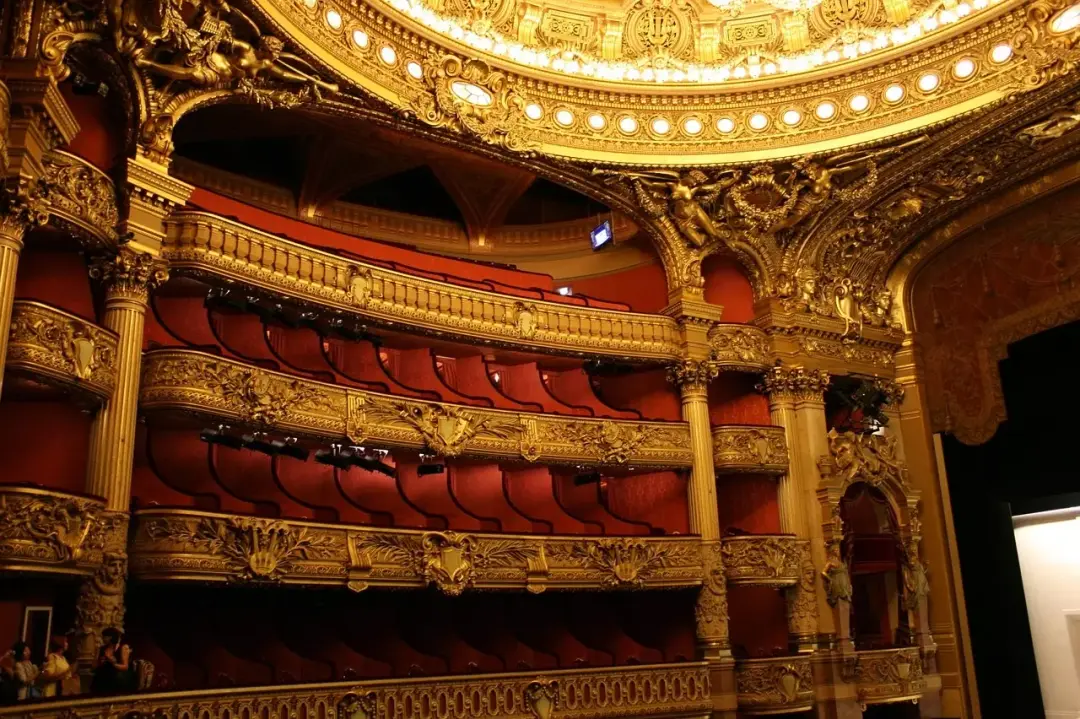
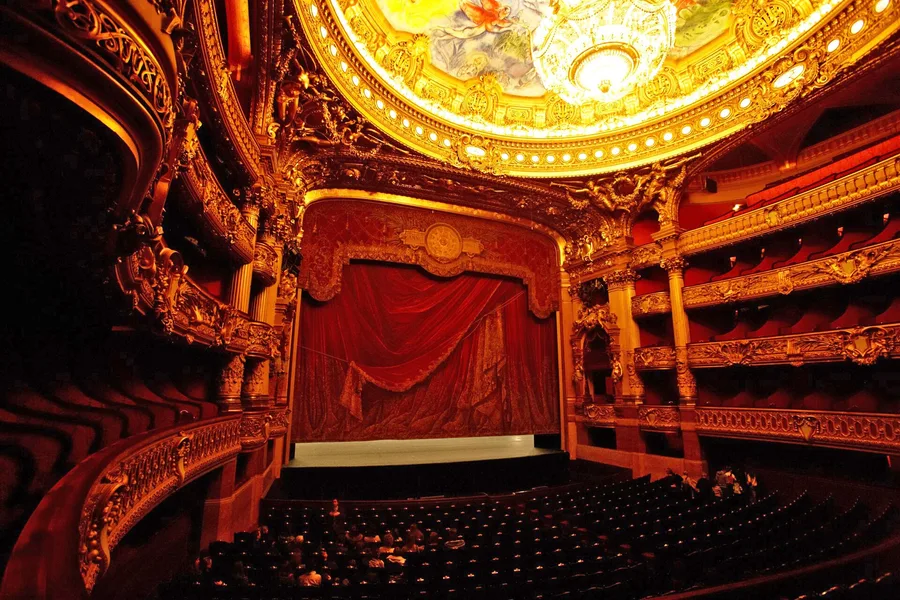
It's a horseshoe-shaped theater in red velvet and gold, with nearly 2,000 seats. In the center hangs the great bronze and crystal chandelier, which weighs between 7 and 8 metric tons, depending on the source. On May 20, 1896, during a performance, one of its counterweights fell and killed a woman in the audience. The chandelier itself never crashed, despite what happens in The Phantom of the Opera.
Kid challenge: how many elephants would it take to weigh as much as the chandelier? Hint: a big elephant weighs about 6 metric tons. Then talk about the difference between the real accident and the story in the novel.
Fun fact: the young students of the Paris Opera Ballet School are nicknamed the "little rats." Their school moved out of the city in 1987, but the little rats still dance on the Garnier stage in their own shows.
9. Marc Chagall's Ceiling
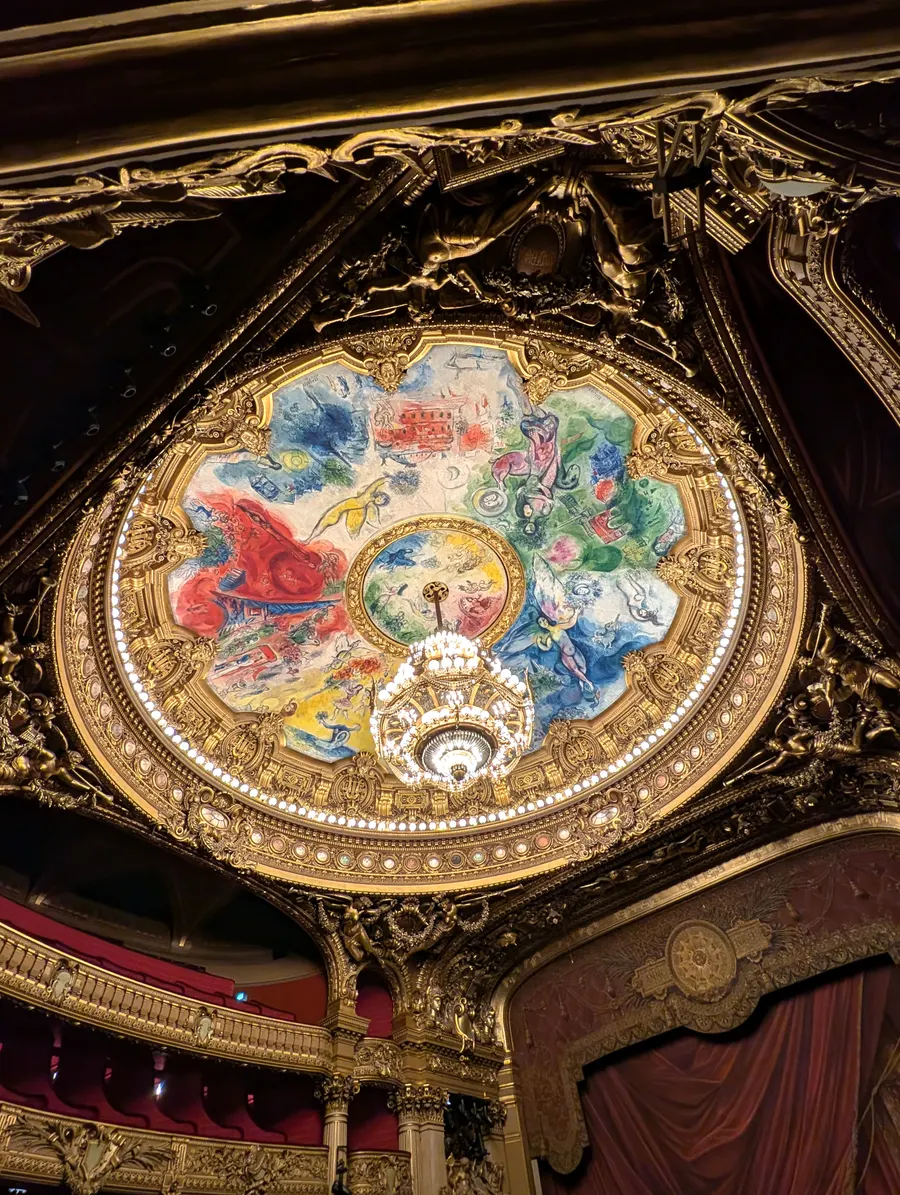
Painted by Marc Chagall and unveiled in 1964, the ceiling is full of bright colors, dancers, angels, animals, and Paris monuments. It pays tribute to 14 composers, from Mozart to Stravinsky, including Bizet, Tchaikovsky, and Debussy. The original ceiling by Jules-Eugène Lenepveu was never destroyed. It's still there, hidden under Chagall's canvases.
Kid challenge: find the Eiffel Tower, then an animal, then a musical instrument. Older kids can weigh in on a big debate from 1964: does a modern ceiling belong in a theater from 1875?
10. "ANNO 1669" Above the Curtain
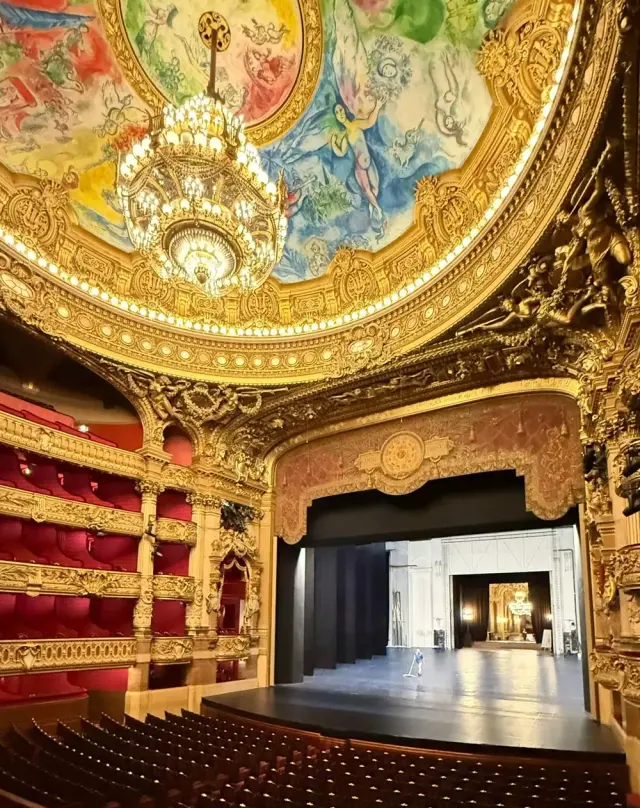
Look above the stage curtain, at the wide decorated band across the top. You'll see a sun with a human face, a Latin motto, and a date: ANNO 1669. That's the emblem of King Louis XIV, and the year he chartered an Academy of Opera, the ancestor of today's Paris Opera. So the institution is about two centuries older than Garnier's palace.
Kid challenge: whose sun is it? Kids who know about the Sun King figure it out fast.
11. Box 5, the Phantom's Box
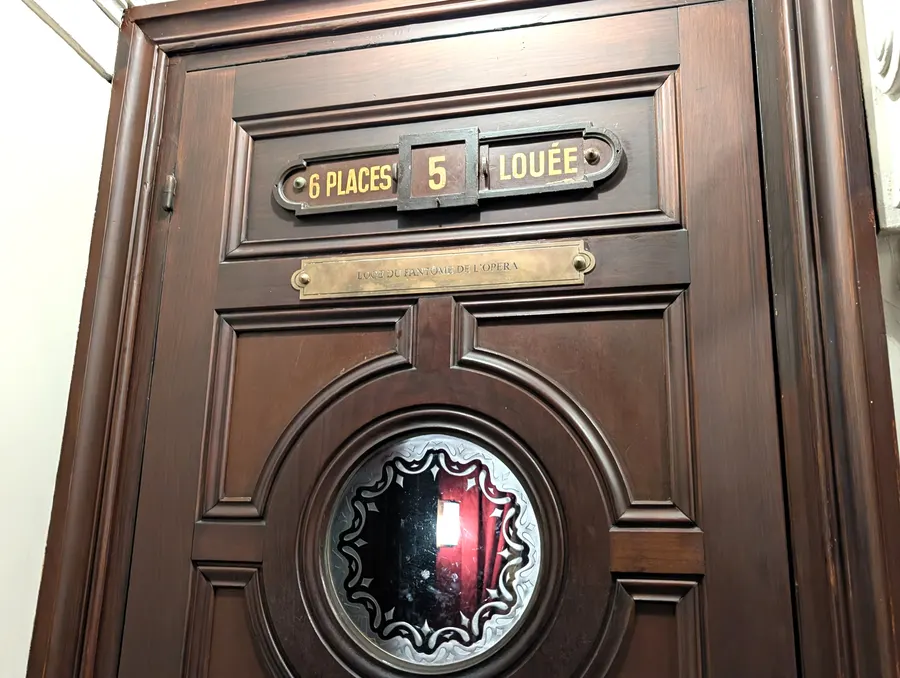
Gaston Leroux published The Phantom of the Opera as a newspaper serial in 1909, then as a book in 1910. In the novel, a mysterious phantom haunts the palace and demands that Box 5 be reserved for him at every performance. The book mixes real places and real events, like the chandelier accident and the water under the Opera. Today, a brass plaque on the door of the box keeps the legend alive.
Kid challenge: read the plaque together, then play true or false. Did the chandelier fall? Is there water under the Opera? Did the phantom really exist? The answers are more surprising than you'd think.
We visit the Phantom's box on our Secrets of the Opera tour.
12. Under the Stage, a Real Lake
While digging the foundations, Garnier's builders hit groundwater. To protect the building, the architect had a huge water tank built under the stage. That's the famous "lake" from The Phantom of the Opera. It really exists, and Paris firefighters use it for dive training.
The Foyers: Gold, Mirrors, and Ice Cream
13. The Sun and Moon Salons
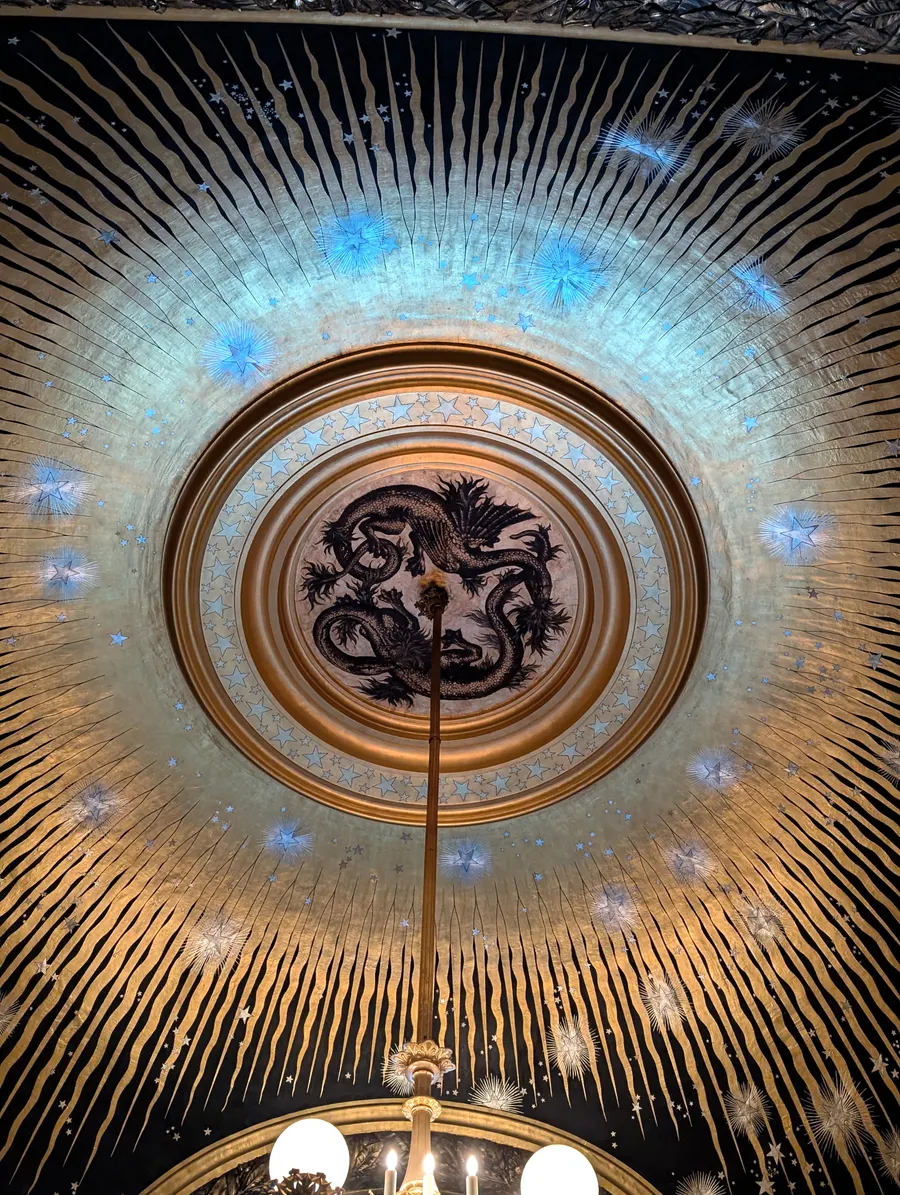
Before the Grand Foyer, the Avant-Foyer glitters with gold mosaics covering the whole vaulted ceiling. On each side, there's a small room. The Sun Salon is black and gold, and the Moon Salon is black and silver. On the Moon Salon ceiling, you'll find night creatures like owls and bats. On the Sun Salon ceiling, there's a dragon and a salamander, just like on the staircase railing.
Kid challenge: before going in, guess which animals live in a Moon Salon. Then compare the two. Which room do your kids like better?
14. The Grand Foyer
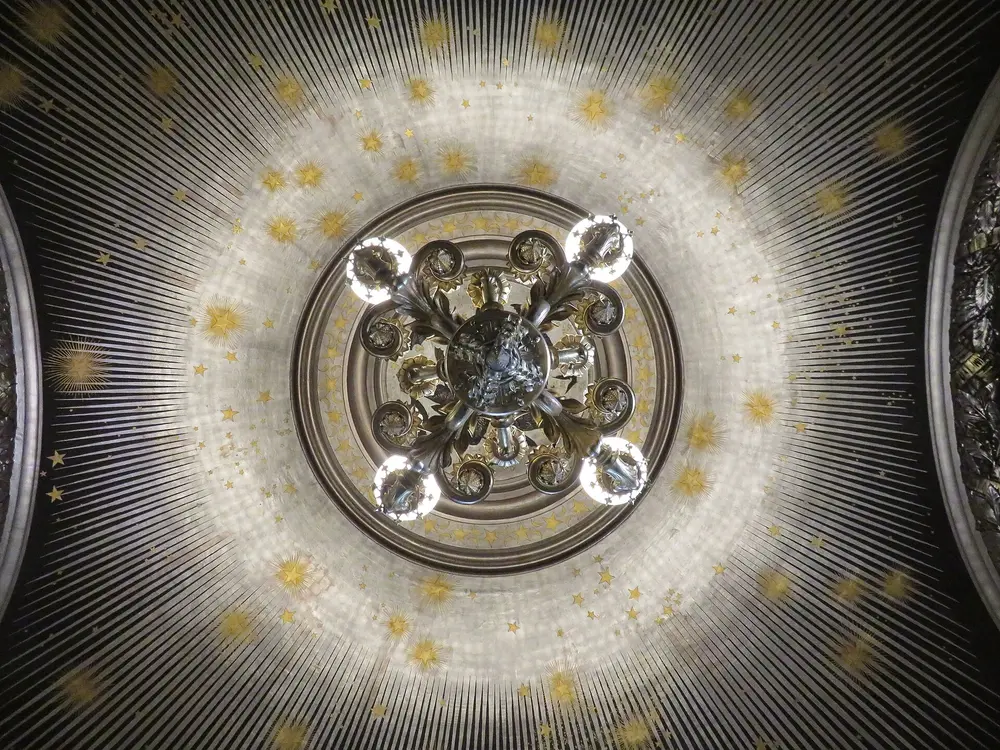
It's 177 feet (54 meters) long and 59 feet (18 meters) high, with mirrors, chandeliers, and gold everywhere. This is where the audience walked around during intermission. On the ceiling, paintings by Paul Baudry tell the history of music. Garnier even put himself in the decor. At each end of the foyer, big carved heads show him as the god Mercury, in a winged helmet, and his wife as the sea goddess Amphitrite.
Kid challenge: hunt for lyres. They're hidden everywhere, even on the door handles and the grilles. Then find the architect's face. Kids often compare this room to the Hall of Mirrors at Versailles, and they're not wrong.
Heading to Versailles too? Read our Versailles with Kids guide.
15. The Glacier Rotunda
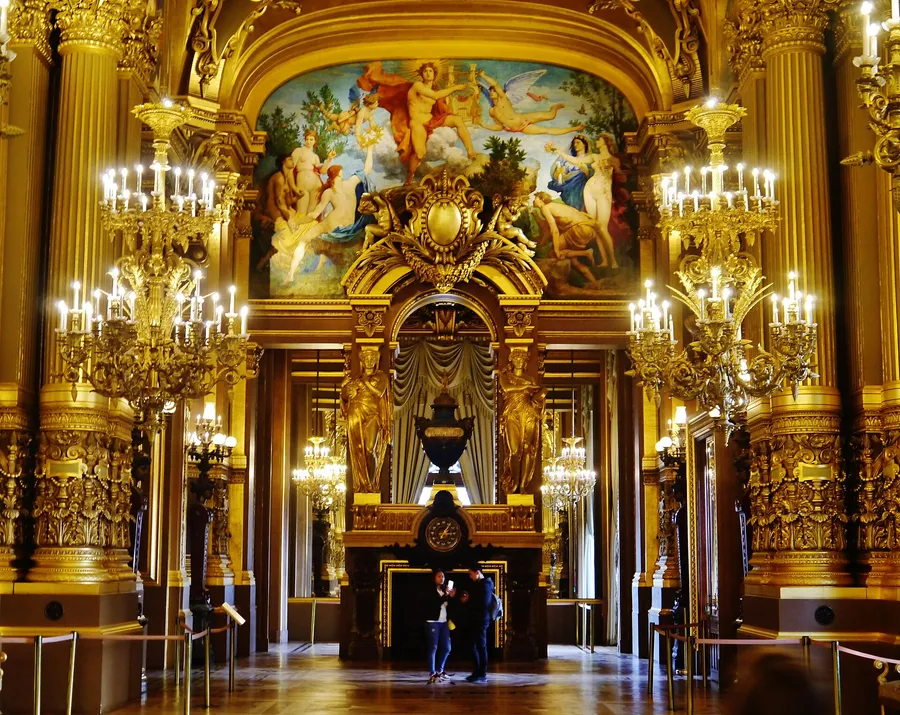
At the end of a gallery, there's a round room where people came to cool off between acts. It's called the Glacier because ice cream and sorbet were served here. On the ceiling, Georges Clairin painted a joyful dance of mythical revelers. On the walls, tapestries show scenes of drinking, fishing, and hunting.
Kid challenge: look at the walls and figure out what people drank here. Then count the dancers on the ceiling.
Good to Know
- Usually open 10 a.m. to 5 p.m., last entry one hour before closing. The auditorium can close for rehearsals.
- Free for kids 12 and under. Visitors from outside the European Economic Area pay €25 for adults and €20 for ages 13 to 25.
- Prices and hours were checked in November 2026. They can change, so check the official website before you go.
Want an Expert to Bring It All to Life?
On our private Secrets of the Opera tour, kids hunt for hidden details in the decor, imagine life as a little rat of the ballet, and investigate the mysterious Phantom. We go from the Grand Staircase to the Grand Foyer and the Moon Salon. Most tours include an activity booklet. Tours last 90 to 105 minutes, they're in English, and they're just for your family. Best for ages 6 to 11.
Starting at €550 for a private group of up to 10 people, admission included.
Love Degas's little dancers? See where to find them in our Musée d'Orsay with Kids guide.
Header photo: Benh Lieu Song, Wikimedia Commons, CC BY-SA 3.0 license.