

We're Paris Antoinette, and we guide families and school groups through Orsay every week. The museum covers art from 1848 to 1914, the years when painters broke all the rules. Kids love a good rule breaker. Here's how to make the most of your visit.
Before You Go: 5 Tips for Orsay with Kids
- Don't come on a Monday. The museum is closed. It's open Tuesday through Sunday, 9:30 a.m. to 6 p.m., and until 9:45 p.m. on Thursdays.
- Book a time slot online. Kids under 18 get in free. A full-price adult ticket costs €16 online (as of November 2026).
- Watch for the construction. The entrance area is being renovated until summer 2028. The museum stays open, but the entrances have moved around, so follow the signs.
- Keep it to two hours. Pick a few of the paintings below rather than trying to see everything. Artworks are sometimes lent to other museums or moved to another room, so check the museum map when you arrive.
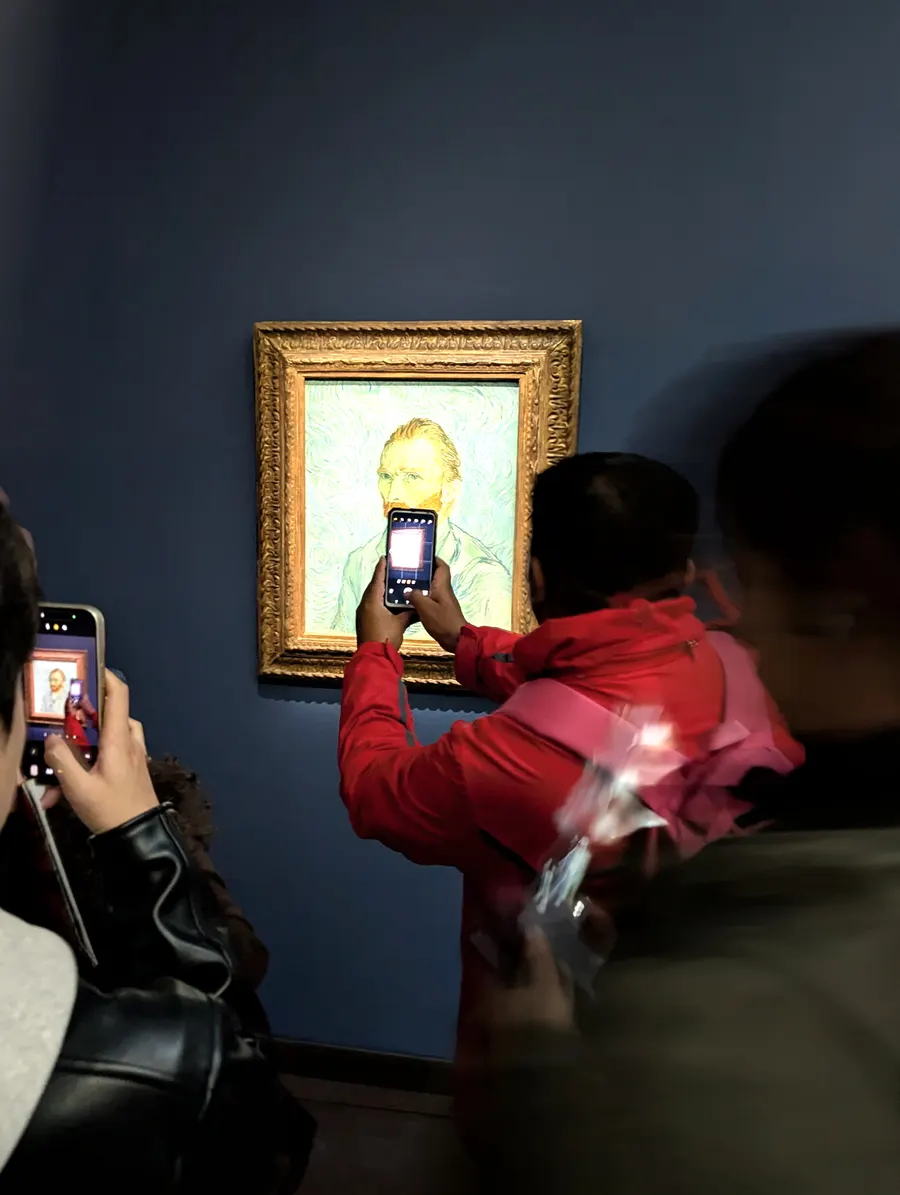
- Go early for Van Gogh. His paintings draw the biggest crowds. See them first, then take your time with the rest.
The Building: A Train Station Turned Museum
1. The Station and Its Clocks
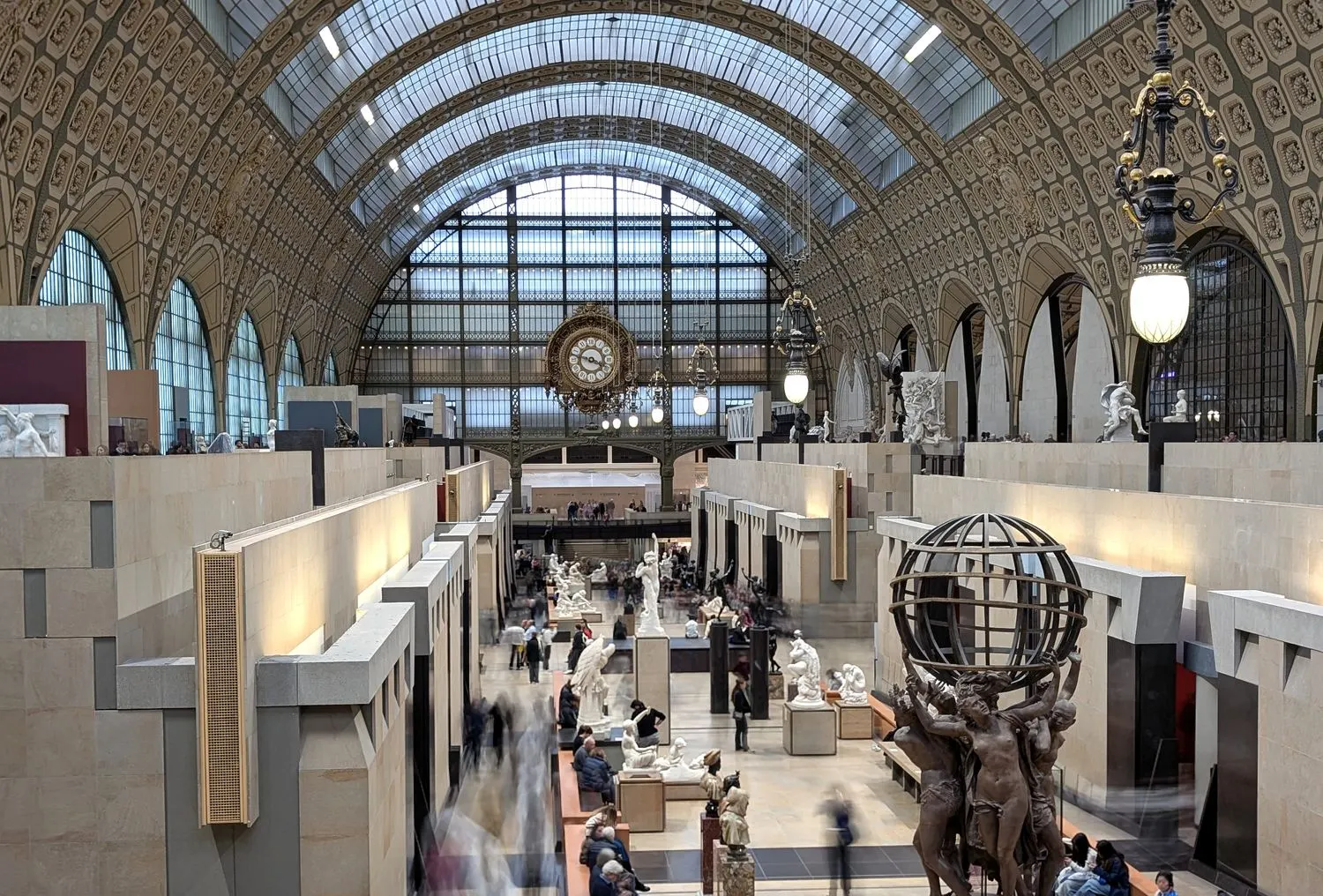
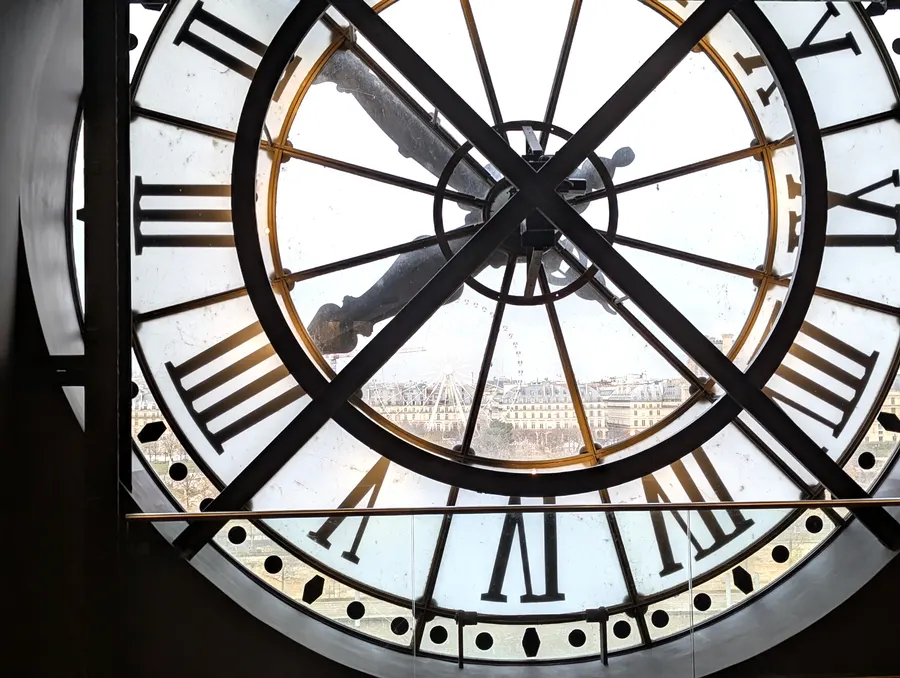
Architect Victor Laloux built the Gare d'Orsay for the 1900 World's Fair, and it opened on July 14, 1900. A painter of the time joked that it looked more like a palace of fine arts than a train station. By 1939, its platforms were too short for modern trains. The empty station was saved and turned into a museum, which opened on December 9, 1986.
Kid challenge: before the first painting, hunt for clues that this was a train station: the huge glass roof, the long hall where the trains ran, the gilded clock. On the top floor, you can look through the back of a giant glass clock, across the Seine to the Louvre.
We start our Orsay Masterpieces tour with the story of the station.
2. Polar Bear, by François Pompon
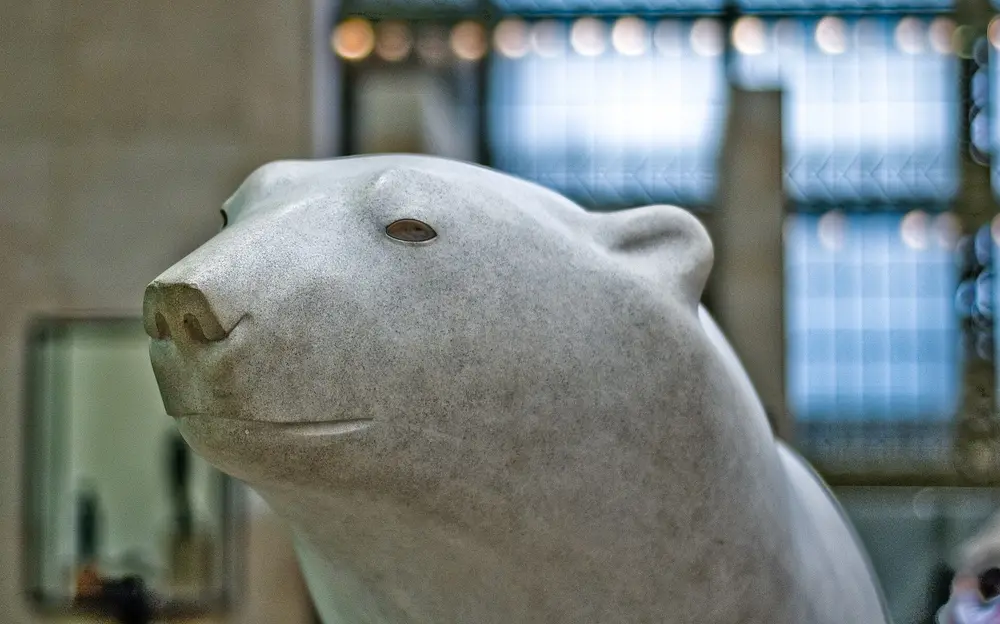
A life-size polar bear, perfectly smooth, plods calmly forward. François Pompon spent years behind the scenes as an assistant to the famous sculptor Rodin. Success came in 1922, when he was 67. The stone bear at Orsay was carved between 1923 and 1933.
Kid challenge: walk all the way around it. No fur, no claws, hardly any details at all. So how can you tell it's a bear? That was Pompon's big idea: keep the movement and forget the rest.
Painting Real Life
3. The Gleaners, by Jean-François Millet
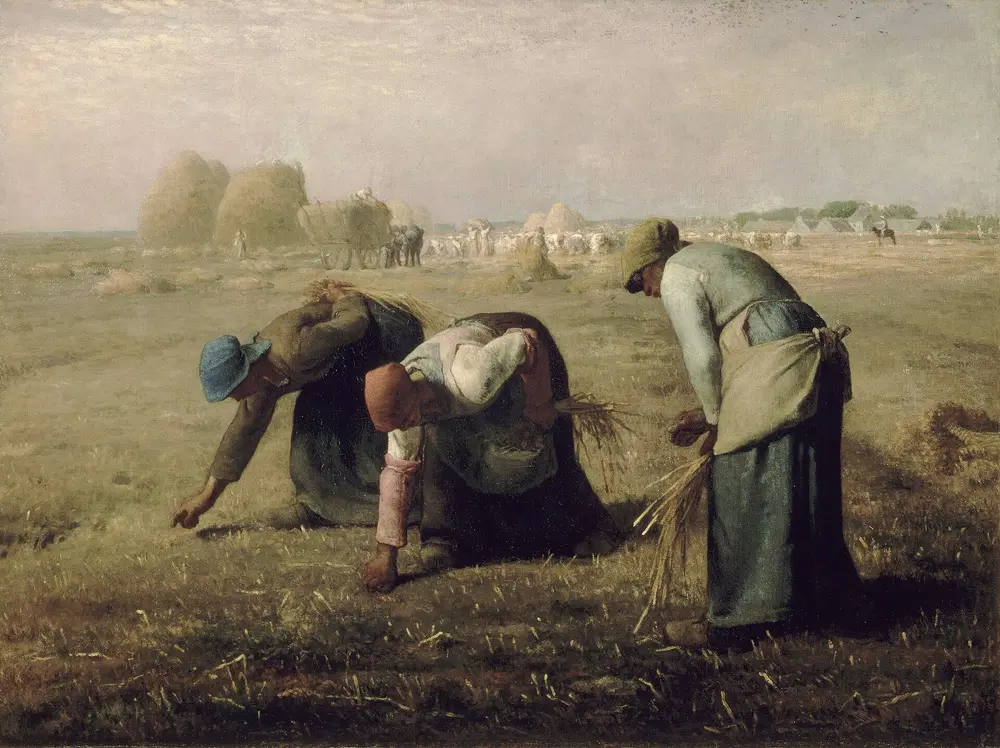
Three women, bent over, pick up the few grains of wheat left behind after the harvest. In the distance, huge haystacks in the background show a harvest that isn't for them. Painted in 1857, the picture gives poor working women the size and dignity usually saved for heroes.
Kid challenge: compare the few stalks in their hands with the giant haystacks in the background. Who has a lot, and who has very little?
Fun fact: gleaning means gathering what's left in a field after the harvest. It was a right granted to the poorest families.
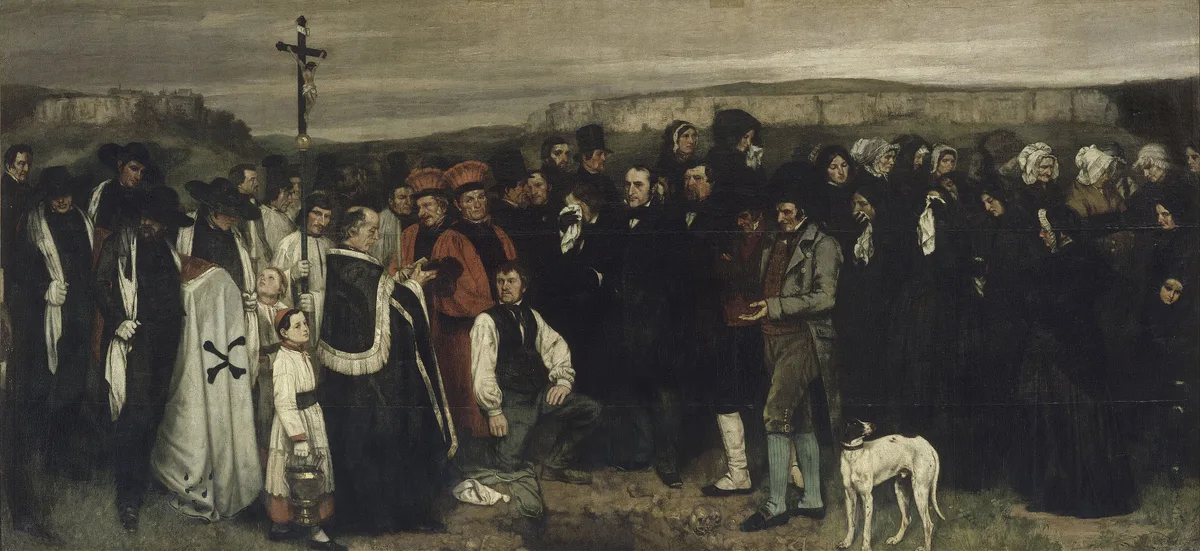
4. A Burial at Ornans, by Gustave Courbet
This giant canvas, 10 by 22 feet (about 3 by 7 meters), shows the funeral of an ordinary man in a small town in eastern France. Courbet asked the townspeople and members of his own family to pose. In 1850, it caused a scandal: paintings this big were meant for kings, gods, and battles. After a long restoration, it went back on display in 2026.
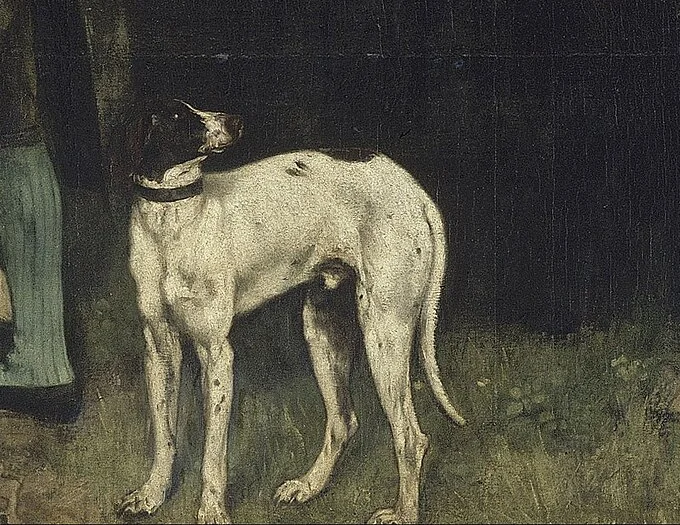
Kid challenge: guess how many people are in the painting before you count them. There are 46, not counting the dog in front. Can you find it?
5. The Floor Scrapers, by Gustave Caillebotte
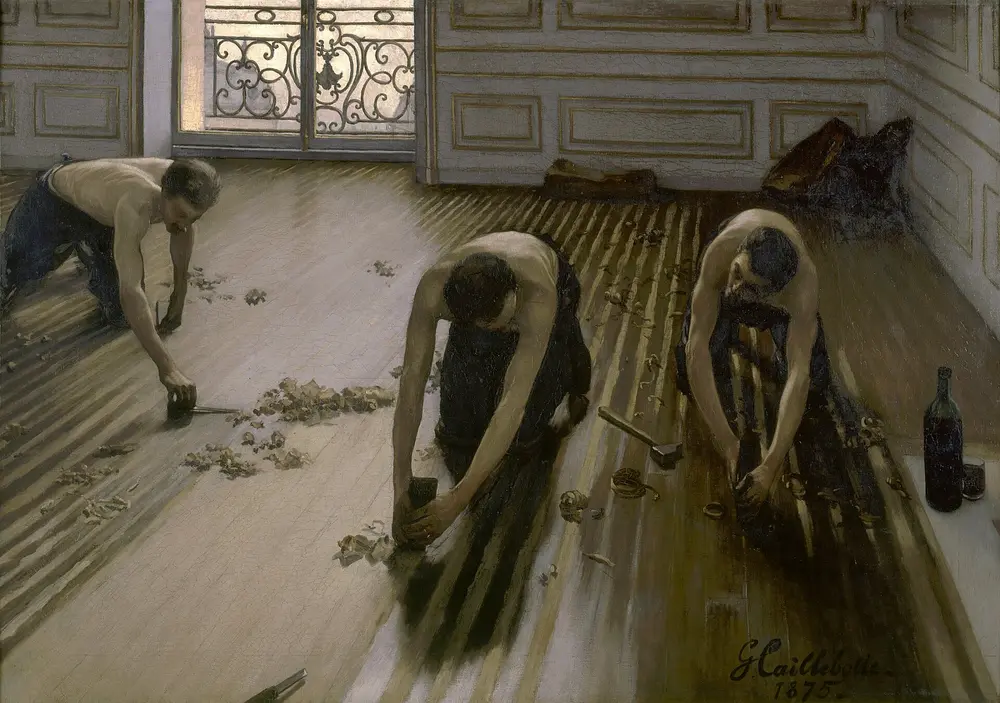
Three workers, shirtless and on their knees, scrape the wooden floor of a Paris apartment. In 1875, the Salon, Paris's official annual art show, rejected the painting because the subject was too ordinary. Caillebotte was wealthy and bought his friends' paintings. He left his collection to France, and many of Orsay's Impressionist paintings come from him.
Kid challenge: find the bottle and the glass on the floor, and the curly wood shavings. Then look at how the light slides across the floorboards.
Manet, the Rule Breaker
6. The Fifer, by Édouard Manet
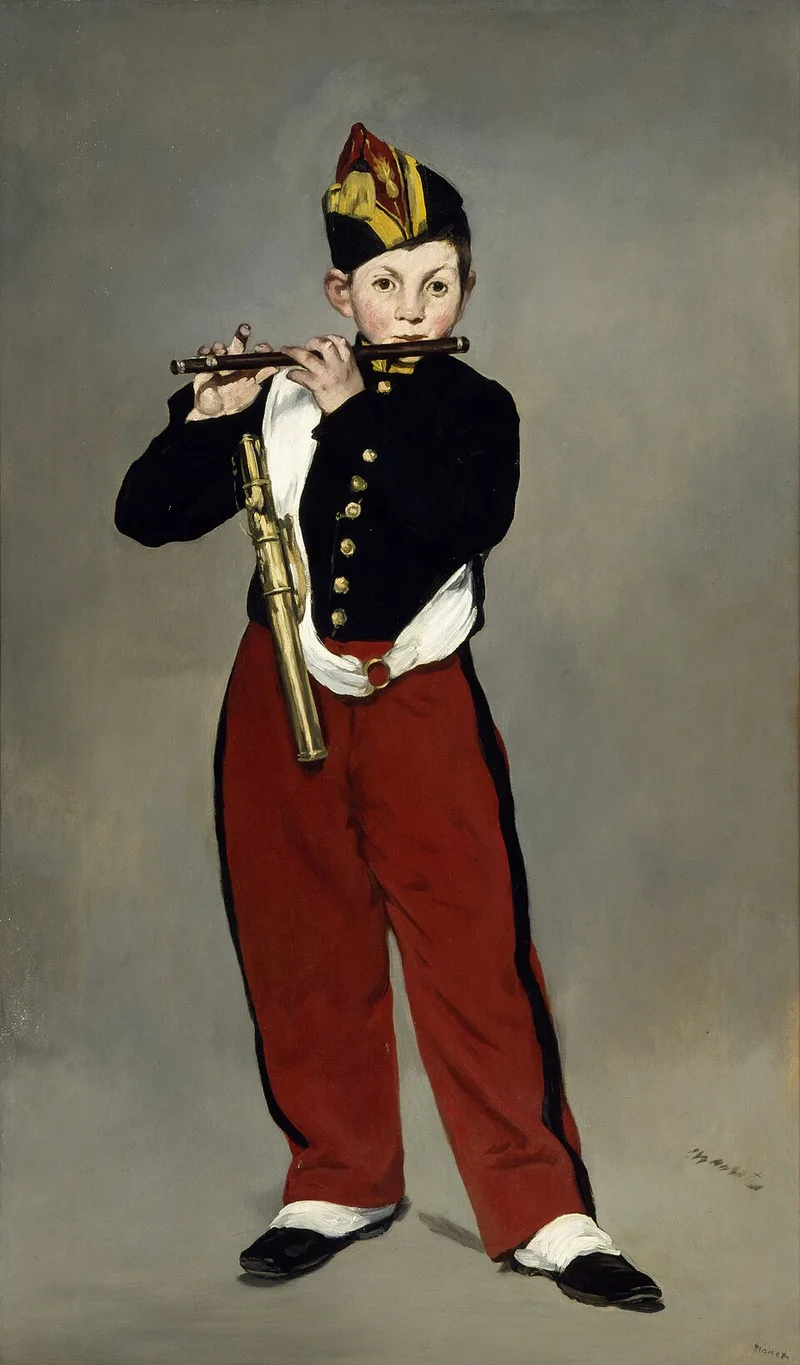
A young musician from the Imperial Guard plays the fife, a small flute. No scenery, no floor, just a plain gray background. The jury of the 1866 Salon rejected it for being too flat.
Kid challenge: where is the boy standing? Only a tiny shadow under his feet puts him on the ground. Kids love his uniform and his white spats.
We meet Manet on our Orsay Masterpieces tour.
7. Luncheon on the Grass, by Édouard Manet
Rejected by the Salon, this painting was shown in 1863 at the Salon des Refusés, an exhibition Emperor Napoleon III created for the rejected artworks. Crowds came to laugh at it: a woman with no clothes on picnics with two men in modern suits, and she looks straight at us. She isn't a goddess or a nymph, and that was the scandal.
Kid challenge: spot the little bird flying at the top of the canvas. (Parent tip: tell the story of the scandal rather than describing the painting.)
8. Olympia, by Édouard Manet
Shown at the Salon of 1865, Olympia caused another storm of mockery. Once again, Manet painted a woman of his own time instead of a goddess. Legend has it the painting had to be hung higher to protect it from angry visitors.
Kid challenge: find the black cat at the foot of the bed, back arched and tail up. Kids always spot it first.
Impressionism: Painting Light
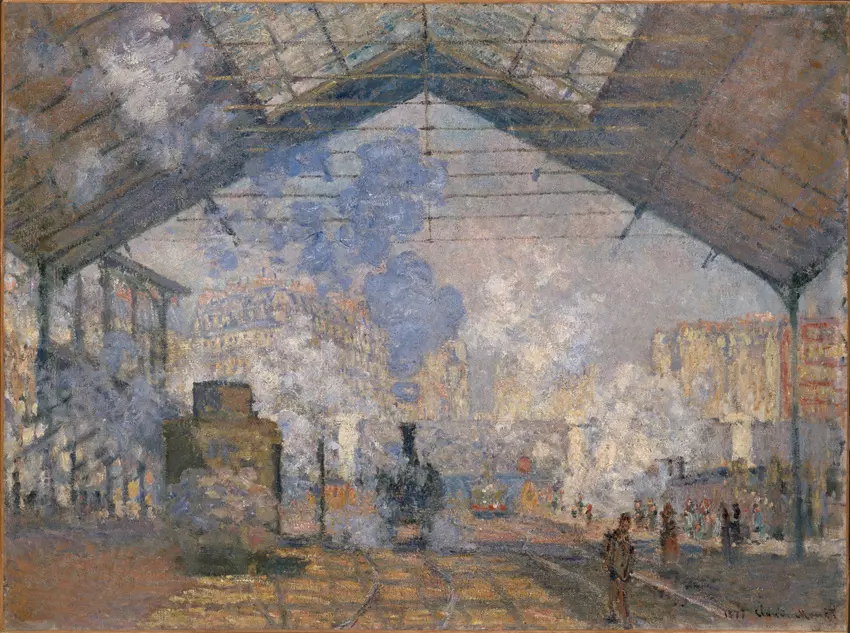
9. The Saint-Lazare Station, by Claude Monet
Monet set up his easel inside the Saint-Lazare train station and painted about a dozen pictures of its engines, its glass roof, and its steam. The one at Orsay dates from 1877. A painting of a train station inside a former train station: perfect.
Kid challenge: compare the glass roof in the painting with the one above your head. Then look at the smoke: did Monet paint it with lines, dots, or clouds of color?
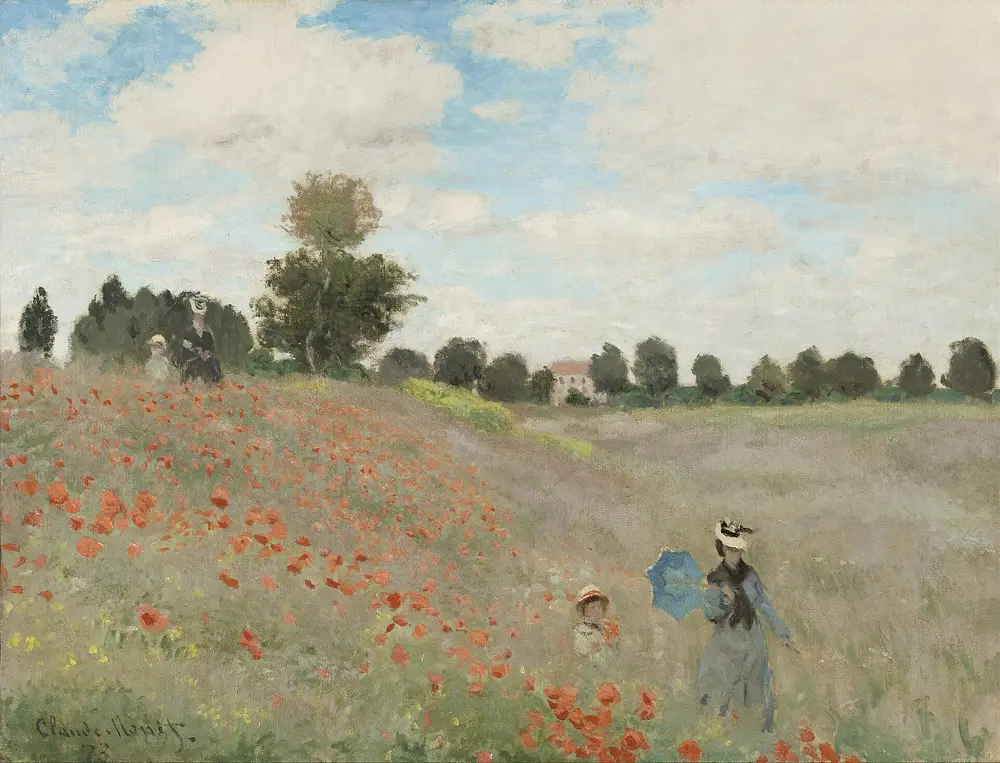
10. Poppy Field, by Claude Monet
A woman with a parasol and a child (probably Monet's wife, Camille, and their son, Jean) walk through a hillside of red poppies near Argenteuil. The painting was shown in 1874 at the very first Impressionist exhibition.
Kid challenge: step up close. The poppies are just red blobs. Now step back a few steps: the flowers appear! It's the best way to understand Impressionism.
Fun fact: the word "Impressionism" comes from another Monet painting, Impression, Sunrise, shown at the same 1874 exhibition. A critic used it to make fun of the painters.
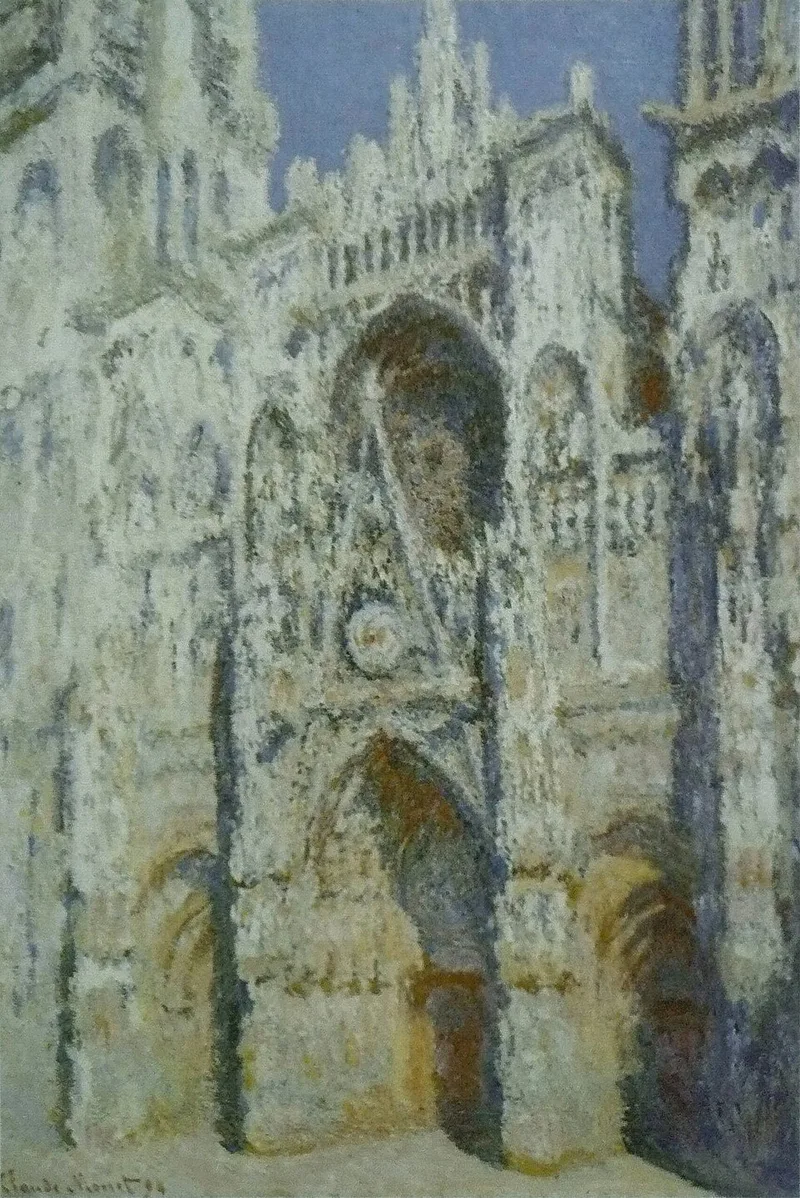
11. Rouen Cathedral, by Claude Monet
Monet painted the front of Rouen Cathedral about 30 times, at every hour of the day and in every kind of weather. Orsay shows five of them side by side: the same building in five different lights.
Kid challenge: guess the time of day in each painting: morning, noon, or sunset? There's no wrong answer, as long as you can explain why.
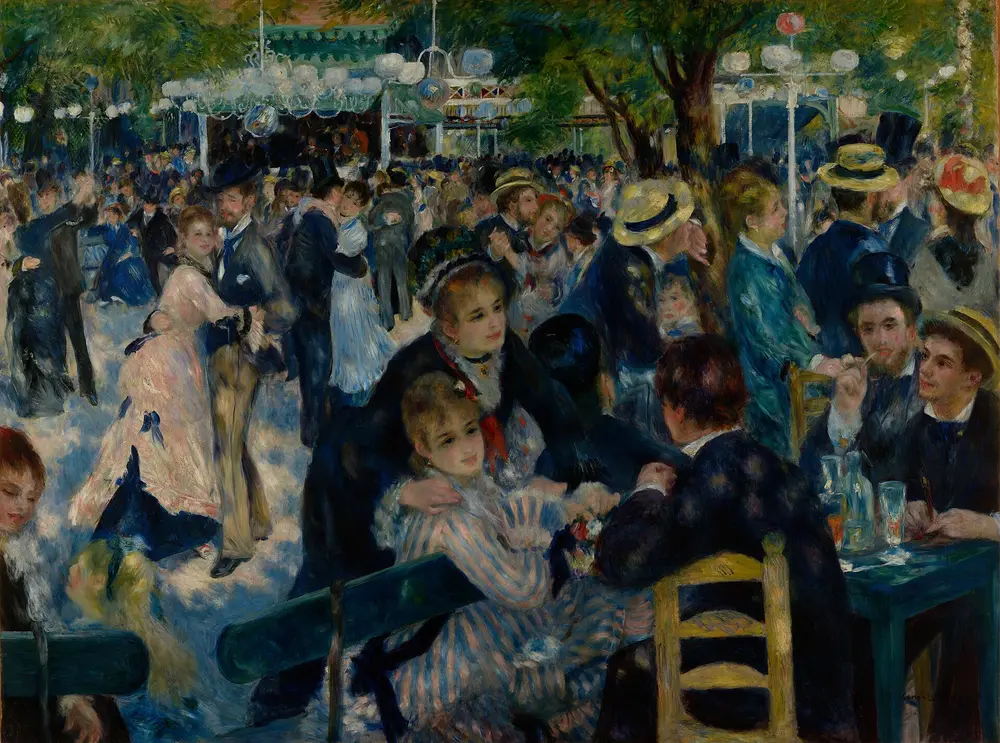
12. Dance at Le Moulin de la Galette, by Auguste Renoir
A Sunday afternoon in Montmartre, with people dancing outdoors under the trees. Renoir asked his friends to pose and painted the sunlight falling through the leaves in little bright spots on their clothes. The painting dates from 1876.
Kid challenge: find the spots of sunlight on the jackets and on the ground. Then figure out who's dancing, who's chatting, and who's having a drink.
Want to see the real windmill? It's on our Montmartre Adventures tour.
Degas and the Dancers
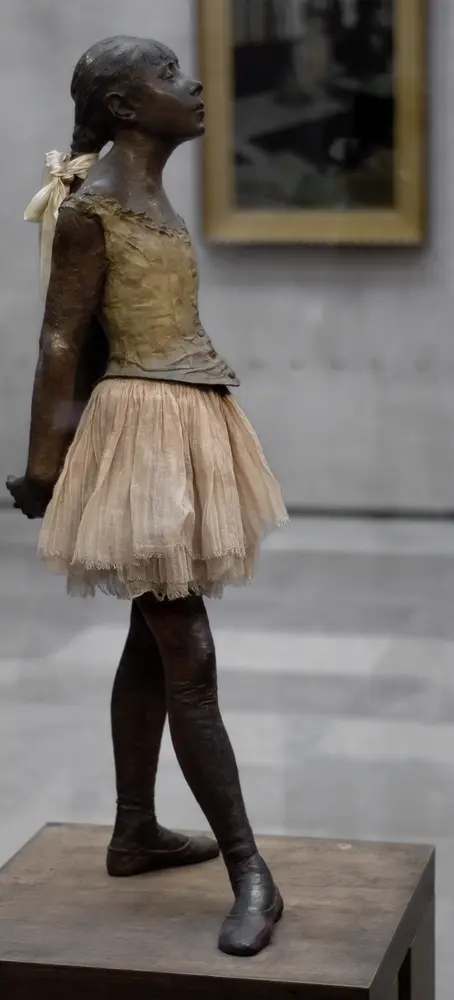
13. Little Dancer Aged Fourteen, by Edgar Degas
A young ballet student from the Paris Opera, hands behind her back, chin up. Her name was Marie van Goethem. In 1881, Degas showed a wax version with a real tutu, a real satin ribbon, and real hair, and the public was shocked. The statue at Orsay is a bronze cast made after the artist's death, and it also wears a fabric tutu and ribbon.
Kid challenge: find what isn't made of bronze. And here's a fun word: the young students of the Opera's ballet school are nicknamed "little rats."
See the palace where they danced on our Secrets of the Opera tour.
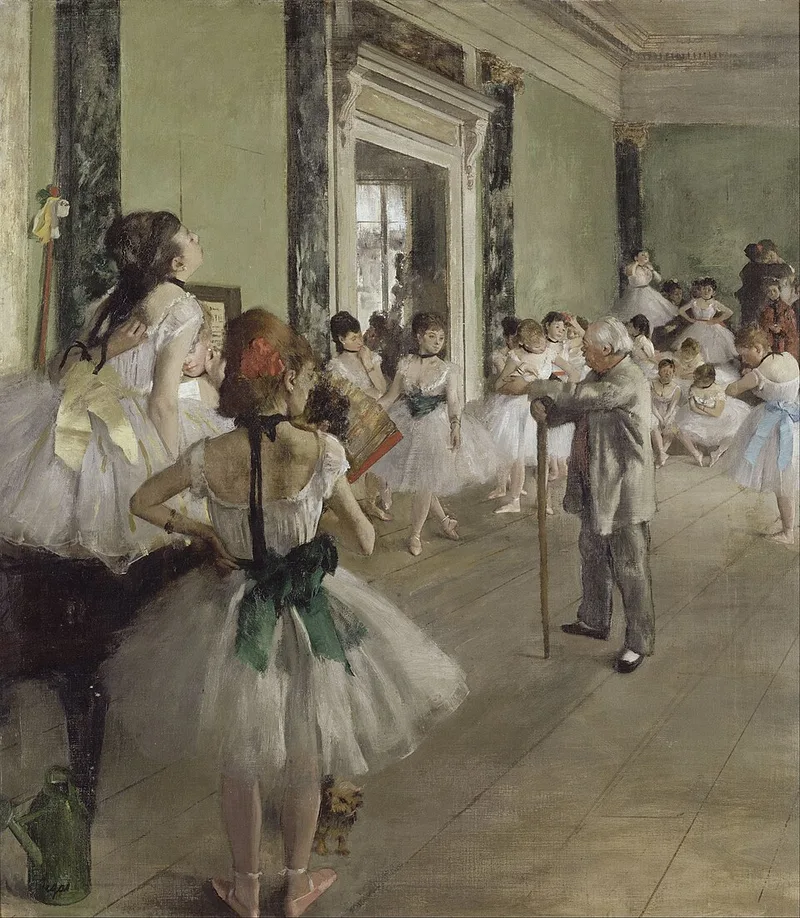
14. The Dance Class, by Edgar Degas
A ballet lesson in a rehearsal room of the opera house that came before the Palais Garnier. In the middle, the aging ballet master Jules Perrot leans on his cane while a student dances. All around, the other girls wait, stretch, and chat.
Kid challenge: find the girl scratching her back, and the ones who aren't watching the teacher at all. Degas loved showing what happens backstage rather than the show itself.
After Impressionism: Bold Colors and Tiny Dots
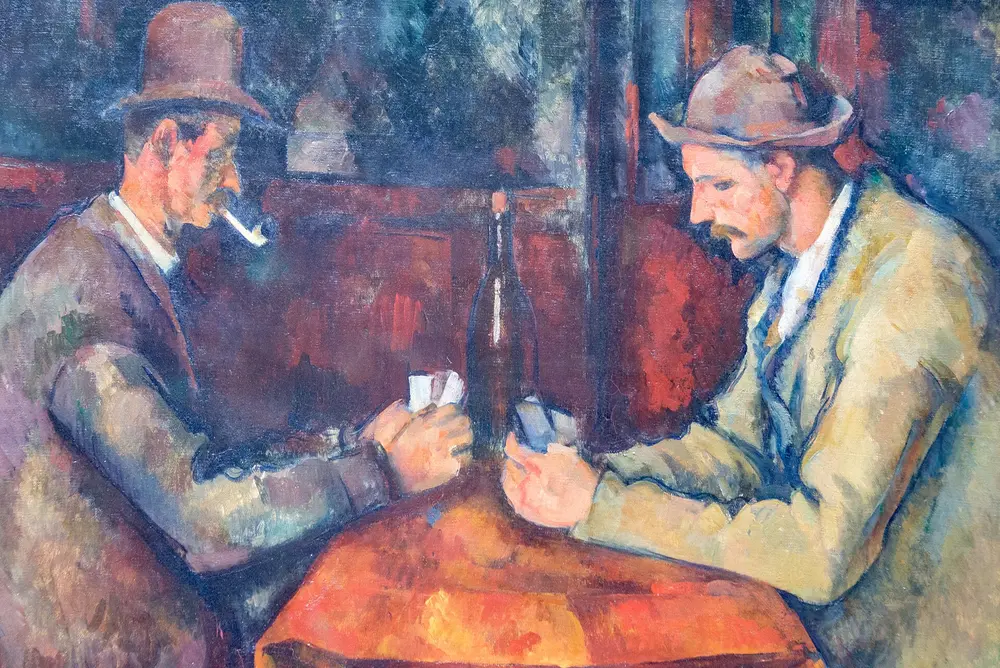
15. The Card Players, by Paul Cézanne
Two farmers sit face to face with a bottle between them, focused on their game. The one on the left smokes a pipe. Cézanne painted this subject five times, and according to press reports, one version sold for more than $250 million in 2011.
Kid challenge: who's going to win, and why? Kids suddenly study the hands, the faces, and the cards like real detectives.
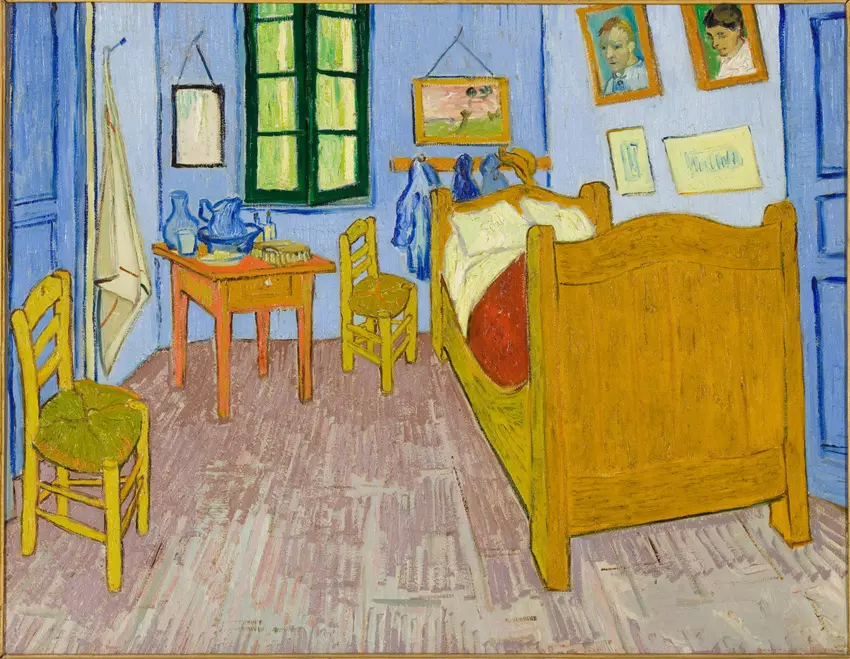
16. Van Gogh's Bedroom in Arles, by Vincent van Gogh
A bed, two chairs, a little table, and pictures on the wall: this is Van Gogh's bedroom in Arles, in the south of France. There are three versions. The one at Orsay, the smallest, was painted in 1889 for his family.
Kid challenge: count everything that comes in pairs (chairs, pillows, portraits). Then ask: is the room straight? The floor tilts and the walls close in, as if the room were tipping toward you.
We visit Van Gogh on our Orsay Masterpieces tour.
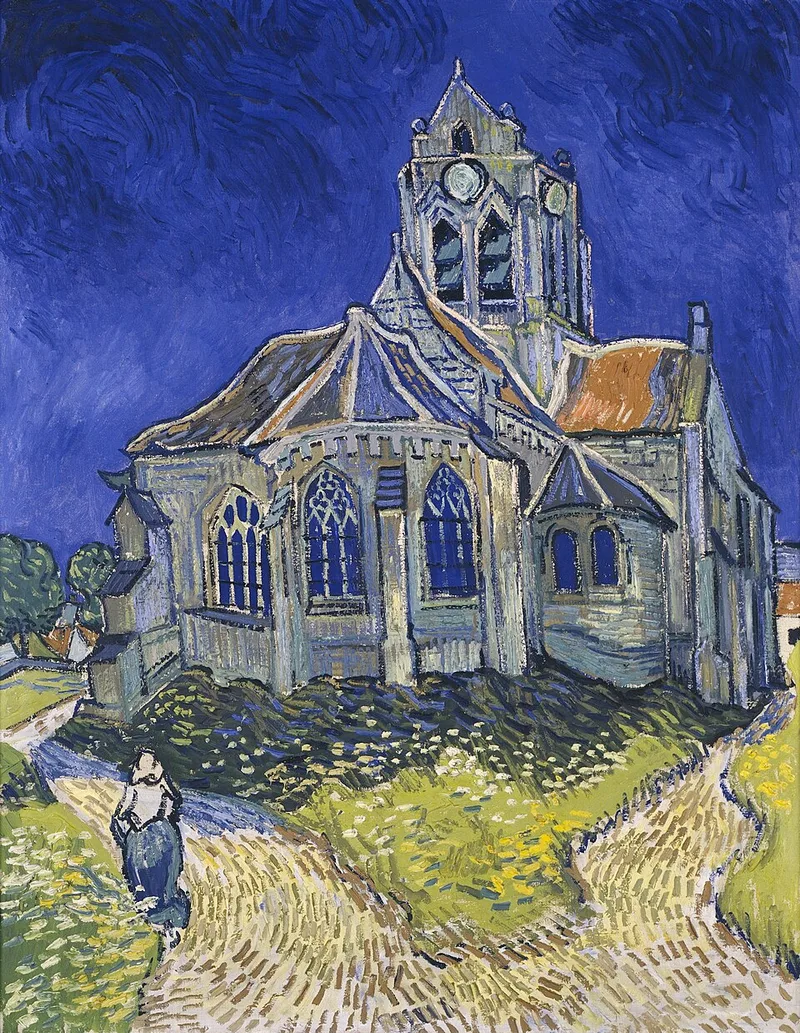
17. The Church at Auvers-sur-Oise, by Vincent van Gogh
A church that seems to wobble under a sky so dark blue it looks like night, even though it's daytime. Van Gogh painted it in June 1890, a few weeks before he died. In the village of Auvers-sur-Oise, he painted 74 pictures in 70 days.
Kid challenge: follow the path that splits in two in front of the church. Which way would you go? The church still stands in Auvers, northwest of Paris. Pull up a photo on your phone and compare.
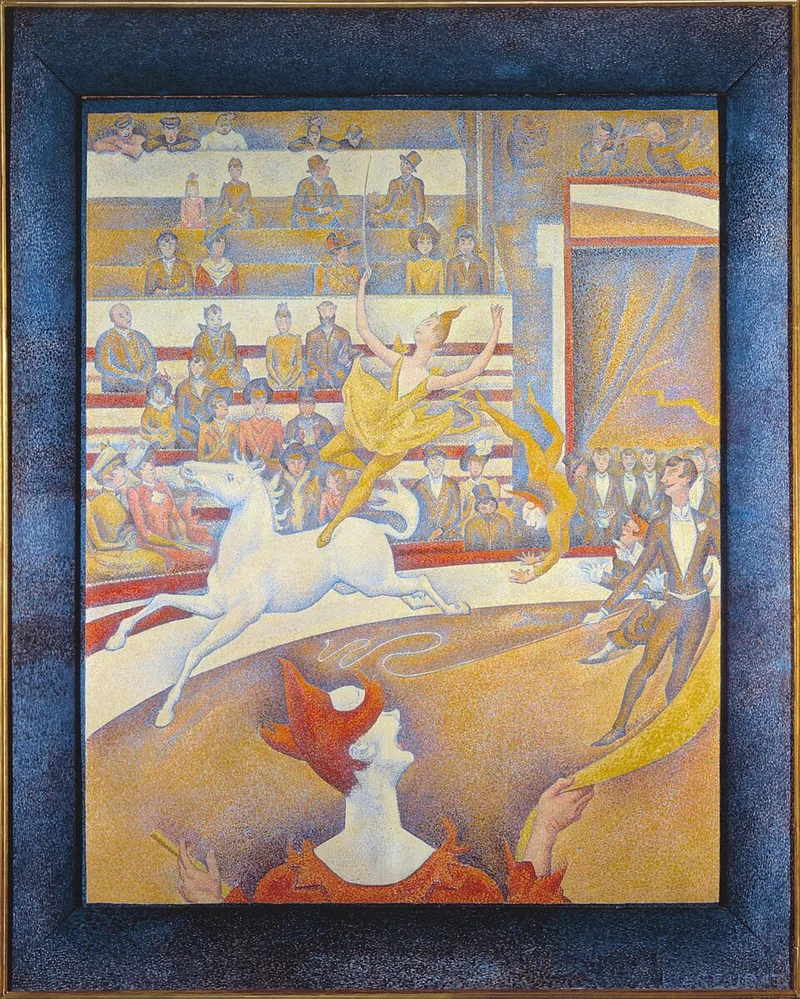
18. The Circus, by Georges Seurat
A rider standing on a galloping horse, an acrobat in midair, and a clown in the foreground, with his back to us. Everything is made of tiny dots of color, even the frame painted on the canvas. Seurat died on March 29, 1891, at age 31, before he could finish it.
Kid challenge: get as close as you can without touching. Just dots! Now step back: the circus appears. Compare it with Monet's blobs. Two ways to paint light.
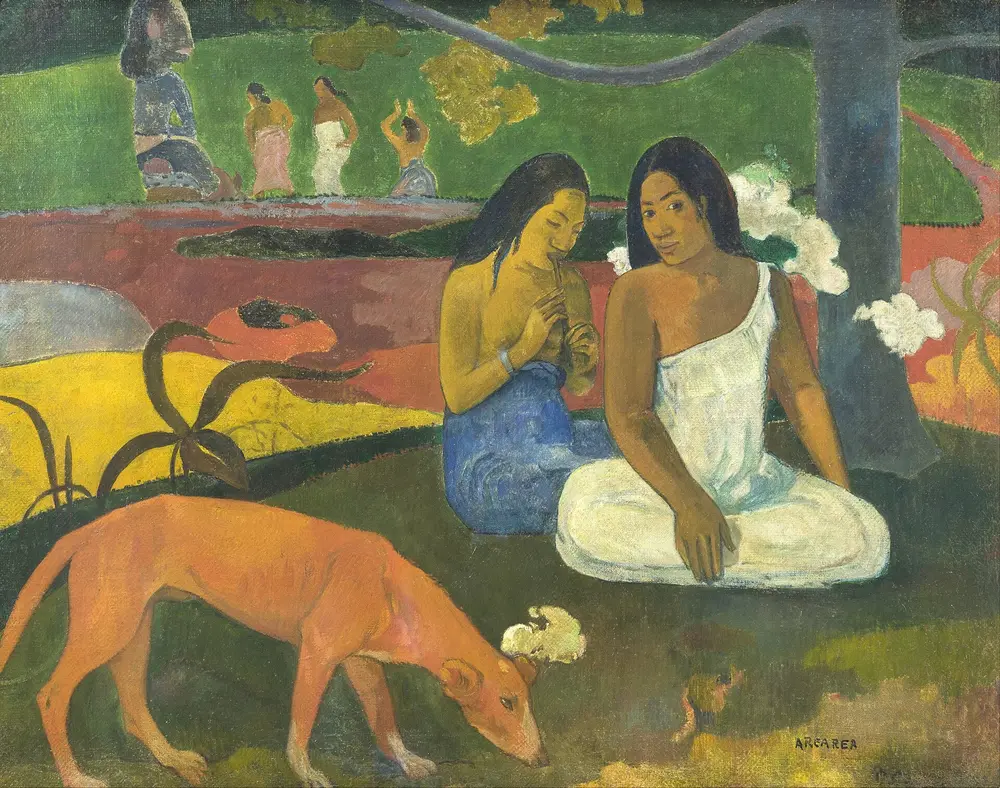
19. Arearea, by Paul Gauguin
In Tahiti, in 1892, two women sit under a tree, and one of them plays a flute. In the foreground, there's a dog... a red one. The title means "Joyfulness." Gauguin picked the colors he wanted, not the ones he saw.
Kid challenge: what color is the dog, and why did Gauguin paint it that way? Then find other "impossible" colors in the painting.
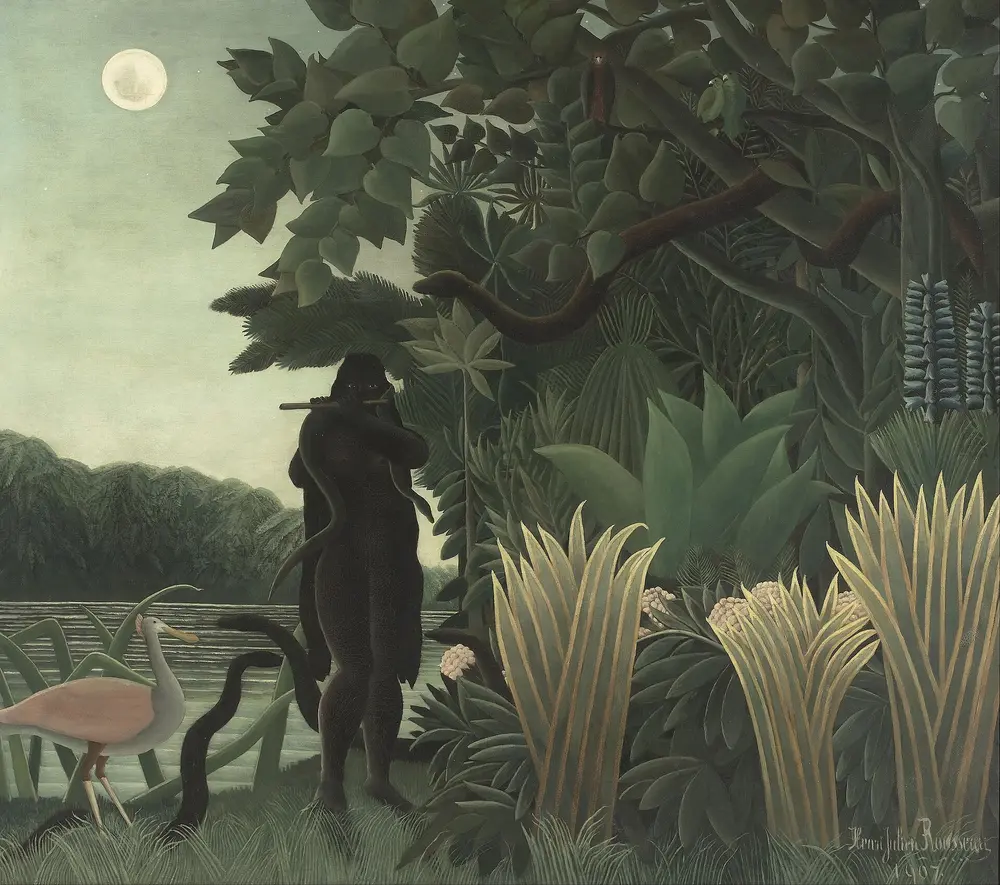
20. The Snake Charmer, by Henri Rousseau
A dark figure with shining eyes plays a flute at the edge of a jungle, and the snakes come closer. The mother of the painter Robert Delaunay commissioned it in 1907, after a trip she took to India. Yet Rousseau never left France: his jungles came from his imagination and from the greenhouses and zoo of the Jardin des Plantes in Paris.
Kid challenge: count the snakes and find the pink bird. Then share the painter's nickname, "the Customs Officer." He worked at the toll office that taxed goods coming into Paris.
Good to Know
- Open Tuesday through Sunday, 9:30 a.m. to 6 p.m., until 9:45 p.m. on Thursdays. Closed on Mondays, May 1, and December 25.
- Free for kids under 18, and for European Economic Area residents under 26 (this doesn't apply to U.S. visitors).
- Prices and hours were checked in November 2026. They can change, so check the official website before you go.
Want an Expert to Bring It All to Life?
On our private Orsay Masterpieces tour, kids hunt for clues left by the old train station, learn to spot an Impressionist brushstroke, and find Seurat's tiny dots. Most tours include an activity booklet. Tours last about 1½ hours (90 to 105 minutes), they're in English, and they're just for your family. Best for ages 6 to 11.
Starting at €480 for a private group of up to 10, plus museum admission.
Heading across the river? Read our Louvre with Kids guide.