

We're Paris Antoinette, and we guide families and school groups through Versailles every week. The palace was home to France's kings from 1682 to 1789, and it's packed with stories children love. Here's how to make the most of it.
Before You Go: 8 Tips for Versailles with Kids
- Don't come on a Monday. The palace is closed. It's open Tuesday to Sunday, 9 a.m. to 6:30 p.m. in high season (late March to late October) and 9 a.m. to 5:30 p.m. the rest of the year. Tuesdays and weekends are usually the busiest days.
- Book a time slot online. You need a timed entry slot for the palace, even if your ticket is free. Expect a security check at the entrance.
- Kids under 18 get in free to the palace and the Trianon Estate. A Passport ticket (palace, Trianon, and gardens) costs €25 per adult from November to March and €35 from April to October (prices checked in November 2026).
- Palace in the morning, gardens in the afternoon. The Trianon Estate, where Marie Antoinette lived, doesn't open until noon.
- Getting there: the RER C commuter train takes about 40 minutes from central Paris to Versailles Château Rive Gauche, then it's a 10-minute walk. A regular Métro-Train-RER ticket covers the trip. Trains from Montparnasse and Saint-Lazare stations work too.
- Strollers are fine, and the palace has elevators. Comfortable shoes for everyone: you'll walk a lot.
- Save their legs. The Petit Trianon is a good 20-minute walk from the palace. The little tourist train (paid) is a lifesaver for small kids. You can also rent bikes or electric golf carts in the park.
- Know what Musical Fountains days are. On these days, the fountains run to Baroque music and the hidden groves open, with a separate garden ticket. They take place from April to October.
Inside the Palace
1. The Marble Courtyard and Its Clock
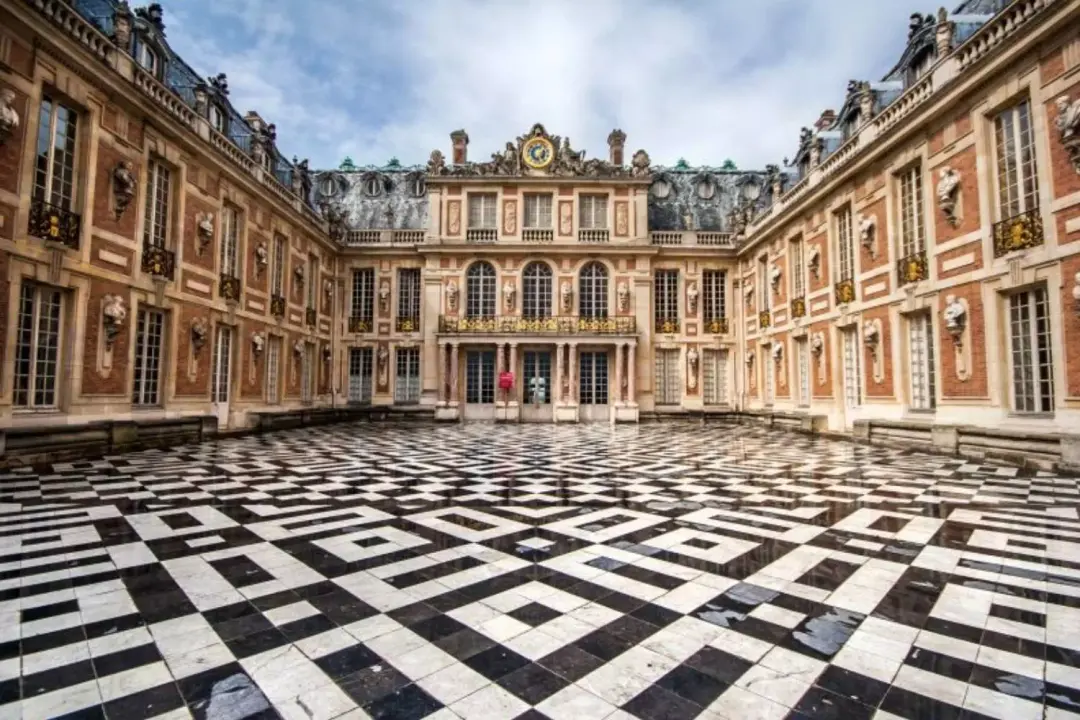
This is where it all began. In 1623, Louis XIII built a small hunting lodge here. His son, Louis XIV, refused to tear it down and built his huge palace around it. The brick and stone walls of the Marble Courtyard are those of his father's château.
In the middle, on the second floor, the gilded balcony belongs to the King's Bedroom. Right above it, a clock is framed by two statues: Mars, god of war, and Hercules, the hero of the 12 labors.
Kid challenge: who can spot the god with the helmet and the hero with the club? Then find the golden balcony of the King's Bedroom, and remember it for later.
Fun fact: legend says the hands of this clock were stopped whenever a king died. On September 1, 1715, they were set to 8:15 a.m., the moment Louis XIV died in the room just below.
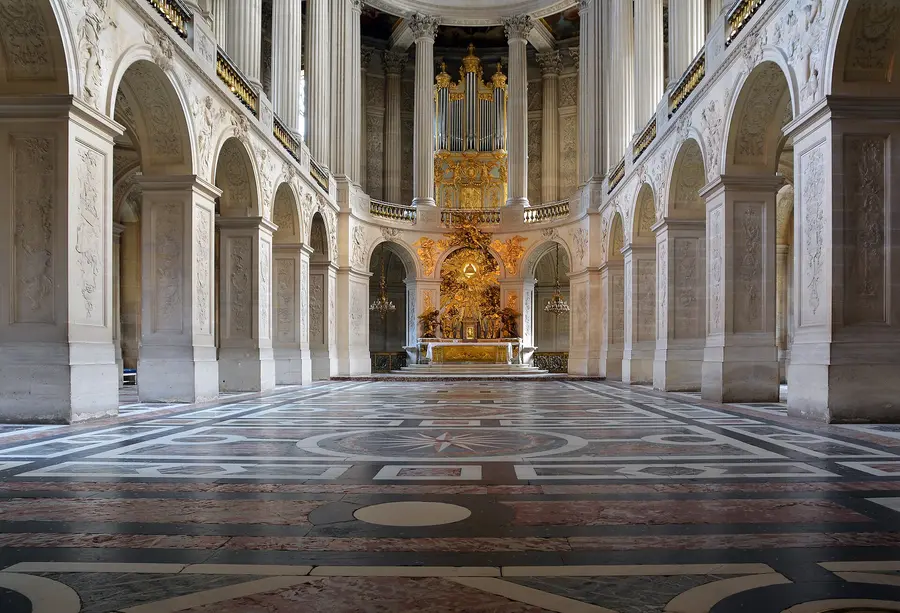
2. The Royal Chapel
White and gold, flooded with light, the chapel was Louis XIV's last great project, finished in 1710. The king attended Mass upstairs, in the royal gallery, facing the altar, while most courtiers stayed downstairs. The writer La Bruyère made fun of them: they turned their backs on the altar to look at the king.
This is also where the future Louis XVI married Marie Antoinette on May 16, 1770. She was 14, he was 15.
Kid challenge: look up at the royal gallery. Where would you sit if you were the king? And if you were a courtier? Why do you think everyone kept turning around?
3. The Hercules Room
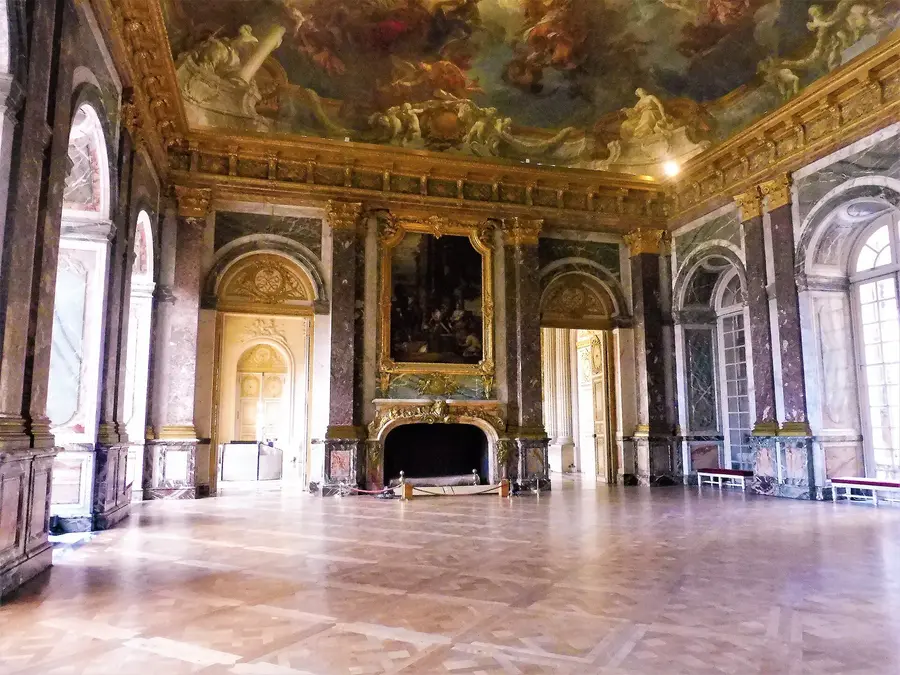
Right after the chapel, this huge marble room has one of the largest painted ceilings in Europe. Painter François Lemoyne spent three years on it and painted 142 figures. Hercules rides a chariot up to the sky, welcomed by the gods of Olympus.
Kid challenge: find Hercules by his club and his lion skin. Then count the figures in just one corner of the ceiling and guess the total. Who gets closest to 142?
4. The Planet Rooms and the Throne Room
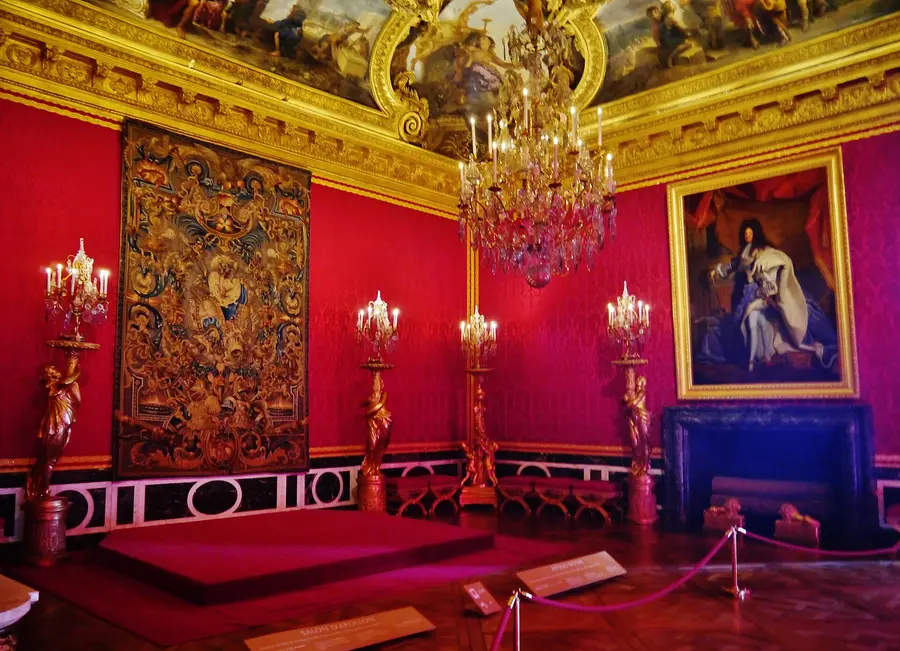
The King's State Apartments are a string of rooms, most of them named after a planet and its god: Venus, Diana (the Moon), Mars, Mercury, and Apollo (the Sun). Back then, people counted the Sun and the Moon among the planets.
Why planets? Because planets orbit the Sun, just as the court revolved around the Sun King. The Apollo Room was the throne room. The original throne was solid silver. It was melted down in 1689 to pay for the king's wars, along with all the palace's silver furniture.
Kid challenge: room after room, guess which god it belongs to by looking for clues on the ceiling: Diana's bow, Mars's helmet, Mercury's winged staff. In the Apollo Room, check out Louis XIV's shoes in the big portrait. Red heels were a privilege only the king could grant.
We explore the State Apartments on our Treasures of Versailles tour.
5. The Hall of Mirrors
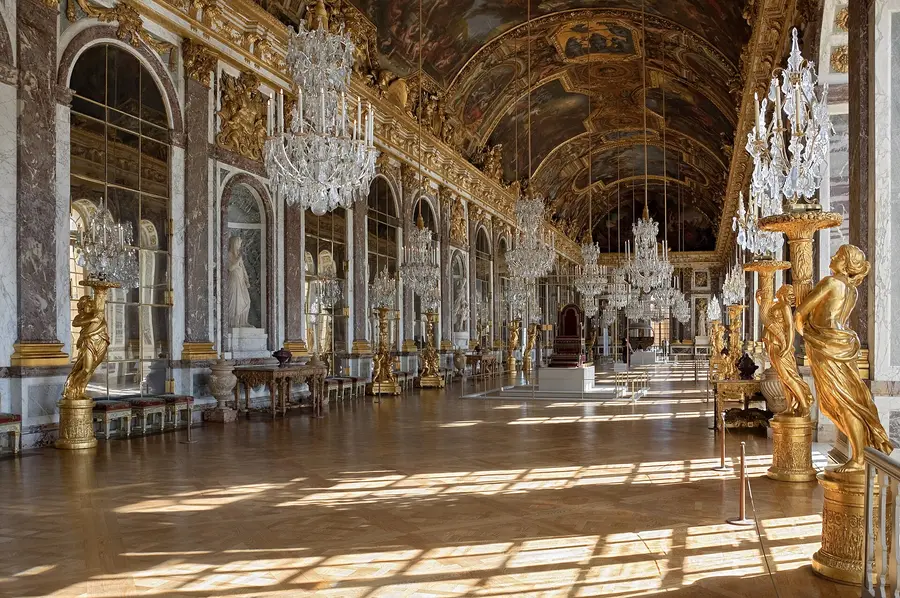
It's 240 feet (73 meters) long, with 357 mirrors. Seventeen windows overlook the gardens, and facing them, 17 mirrored arches bounce the light back. Built between 1678 and 1684, the hall was a passageway, a meeting place, and a ballroom.
At the time, mirrors cost a fortune and Venice had a near-monopoly. These were made in France, by a royal workshop set up to beat Venice at its own game. On the ceiling, about 30 paintings by Charles Le Brun celebrate Louis XIV's victories.
Kid challenge: count the mirrors in just one arch (there are 21), then multiply by 17. Do you get 357? In the middle of the ceiling, find the biggest painting: young Louis XIV deciding to rule on his own.
Fun fact: the Treaty of Versailles, which ended World War I, was signed right here on June 28, 1919.
The Hall of Mirrors is a highlight of our Treasures of Versailles tour.
6. The King's Bedroom
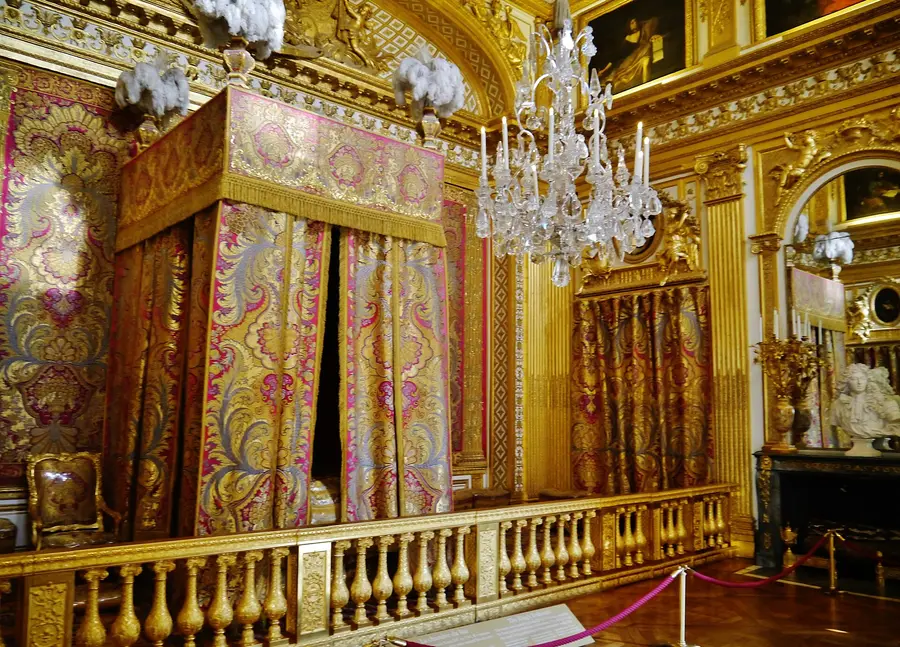
Right in the center of the palace, facing the rising sun, this room was the heart of court life. Every morning, dozens of courtiers watched the king get up, admitted in order of rank. Handing the king his shirt was a huge honor, saved for the most important person in the room. At night, the same ceremony ran in reverse. Louis XIV died here after reigning for 72 years.
Kid challenge: above the bed, a golden woman watches over the king's sleep. Who is she? (She stands for France.) Then talk about it: why did the king want to be watched from morning till night?
7. The Queen's Bedroom and Its Secret Door
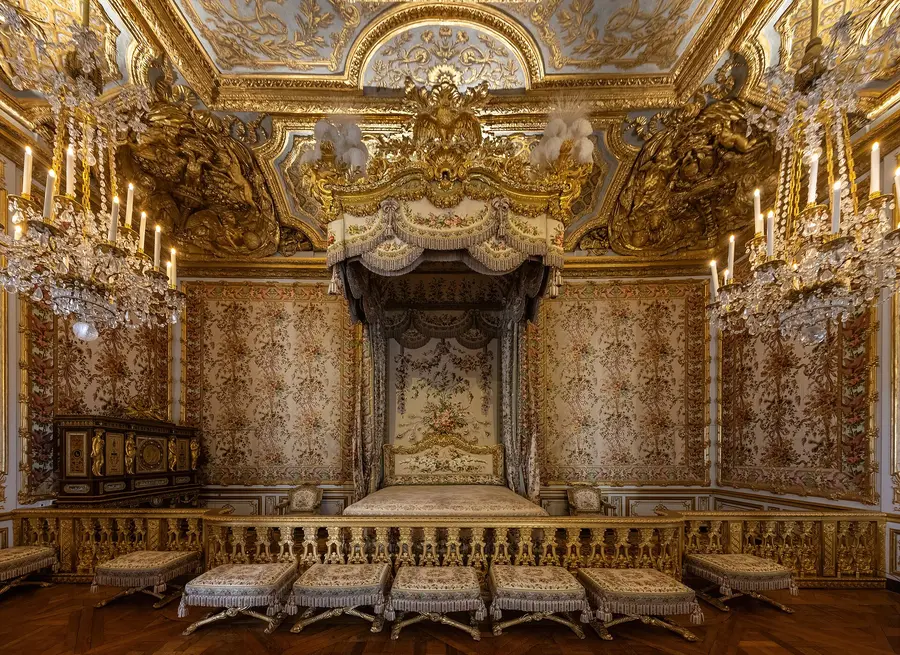
Queens lived in public too, and even gave birth in front of the court: 19 royal children were born in this room. In 1778, when her first daughter was born, Marie Antoinette fainted because the crowd was so big and the room so hot. The floral silk on the walls has been re-created just as she knew it.
Look closely: a small, almost invisible door in the wall leads to her private rooms. On the night of October 5, 1789, when a crowd from Paris stormed the palace, the queen escaped through it to join the king.
Kid challenge: find the hidden door near the bed. Then guess why the court had to watch the birth. (To make sure the baby really was the queen's, and hadn't been swapped!)
8. The Gallery of Great Battles
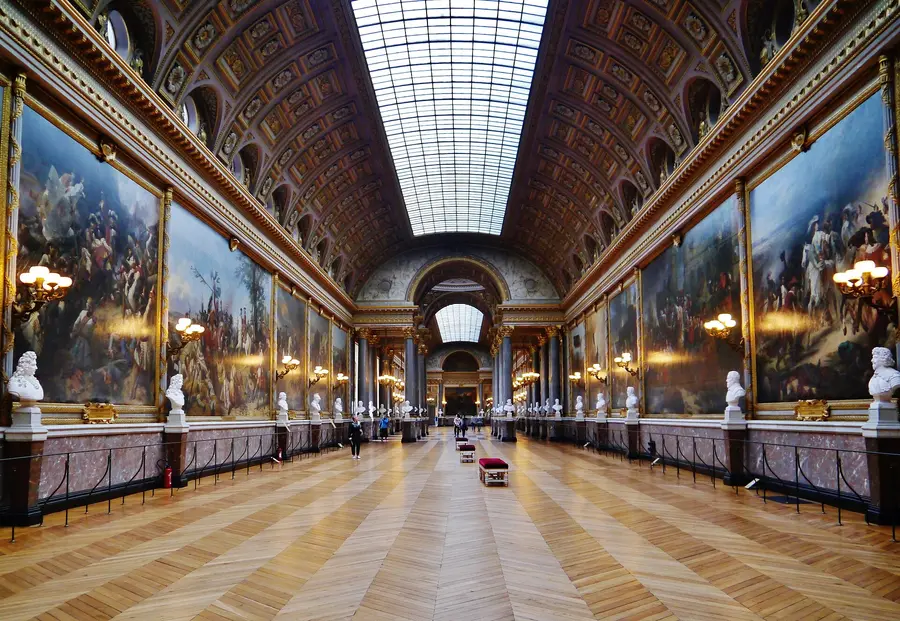
In the 1830s, King Louis-Philippe turned Versailles into a museum of French history. Its centerpiece is this 390-foot (120-meter) gallery, much longer than the Hall of Mirrors. About 30 giant paintings cover 1,300 years of battles, from Clovis, the first king of the Franks, around 496, to Napoleon in 1809. The gallery is sometimes closed, so check before you go.
Kid challenge: find Napoleon by his two-cornered hat, Henry IV by his white plume, and Joan of Arc in her armor. Walking along the gallery, are you going back in time or moving forward?
Can't get enough of Napoleon? Follow him on our Napoleon at Les Invalides tour in Paris.
In the Gardens
9. The Water Parterre and the Grand Perspective
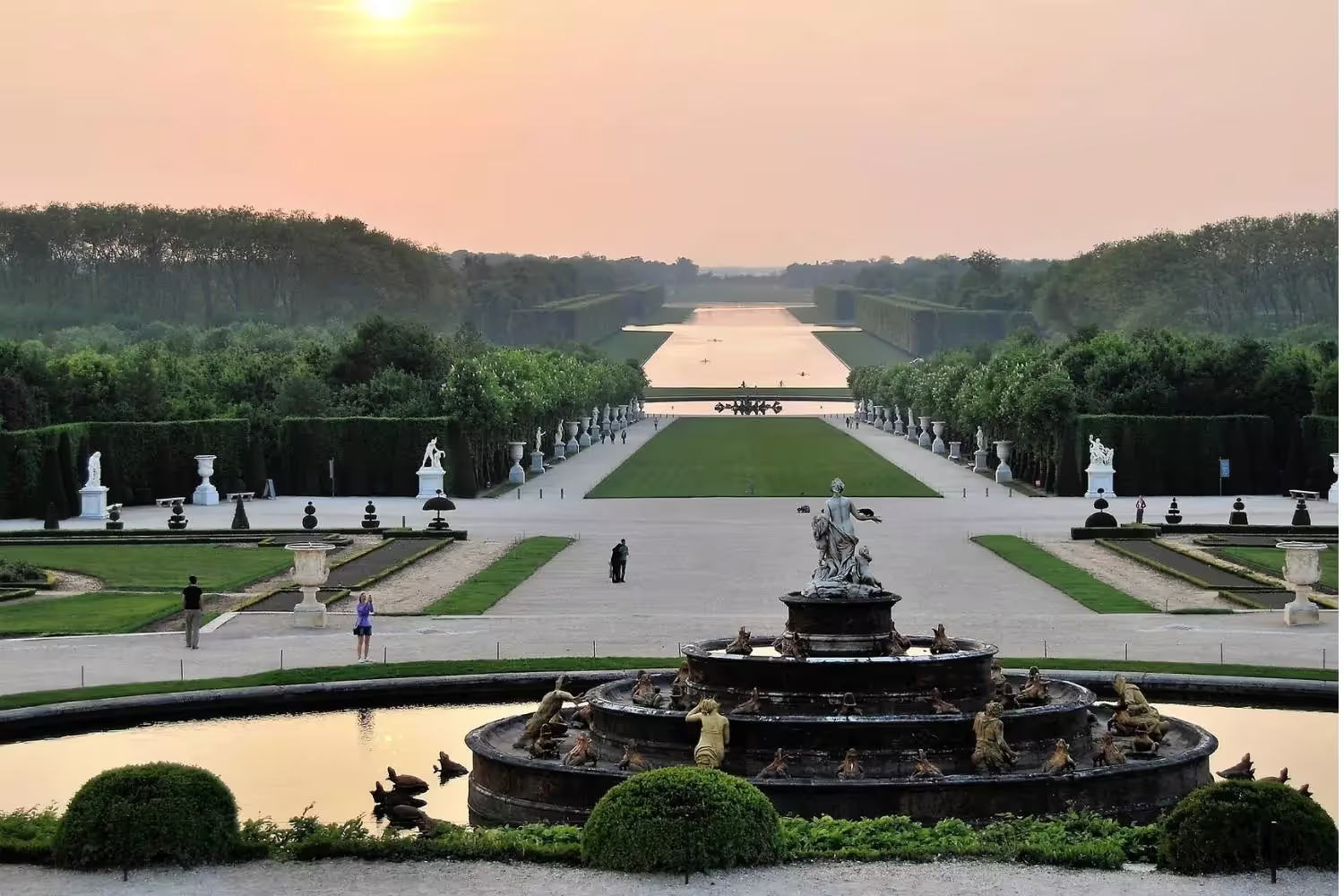
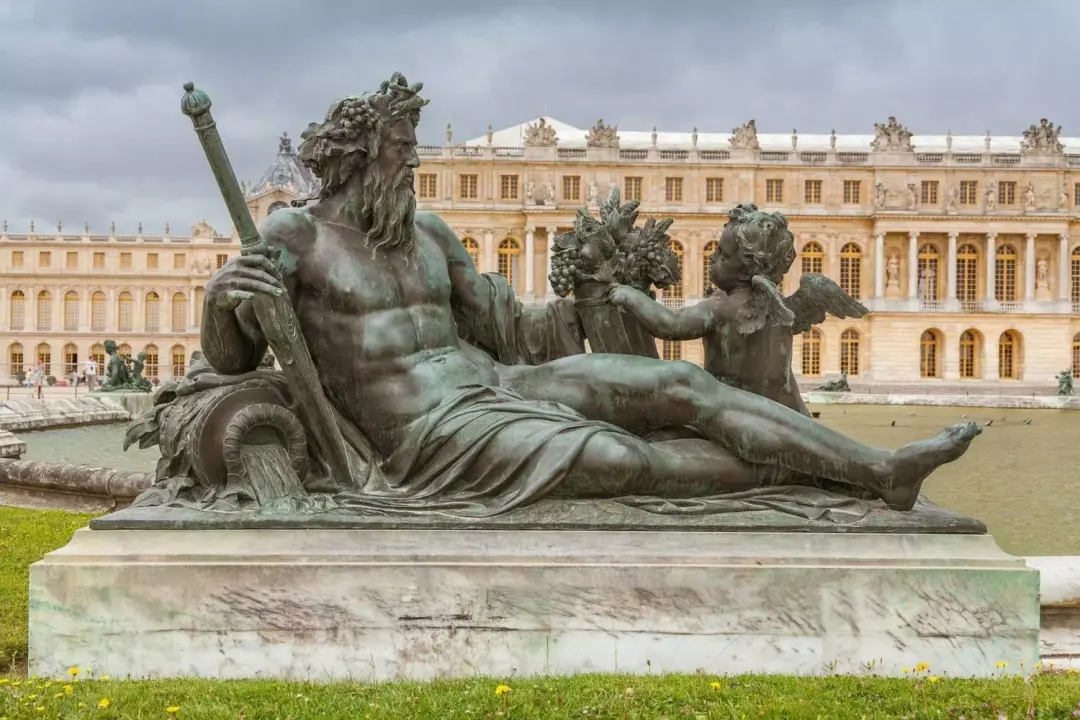
Step out onto the terrace behind the palace. Two large pools reflect the façade. Along their edges, bronze statues stand for the great rivers of France: the Seine, the Loire, the Rhône, the Garonne, and their tributaries.
Ahead of you, the gardener André Le Nôtre lined everything up as far as the eye can see: the Latona Fountain, the long lawn called the Tapis Vert, the Apollo Fountain, and the Grand Canal. On some evenings, the sun sets right at the end of the canal.
Kid challenge: count the children playing around the river statues. Then talk about it: why did Louis XIV want all the rivers of his kingdom right under his windows?
10. The Latona Fountain and Its Frogs
At the bottom of the steps, on a marble pyramid, the goddess Latona protects her two children, Apollo and Diana. The story comes from the Roman poet Ovid: some peasants refused to let Latona drink from their pond and made fun of her. She asked Jupiter for revenge, and he turned them into frogs. All around, you can see them mid-transformation: some still have a human body with a frog's head.
Kid challenge: find a peasant who's half human, half frog. Then think about it: why did the king put this story right below his windows? What message was he sending to anyone who crossed him?
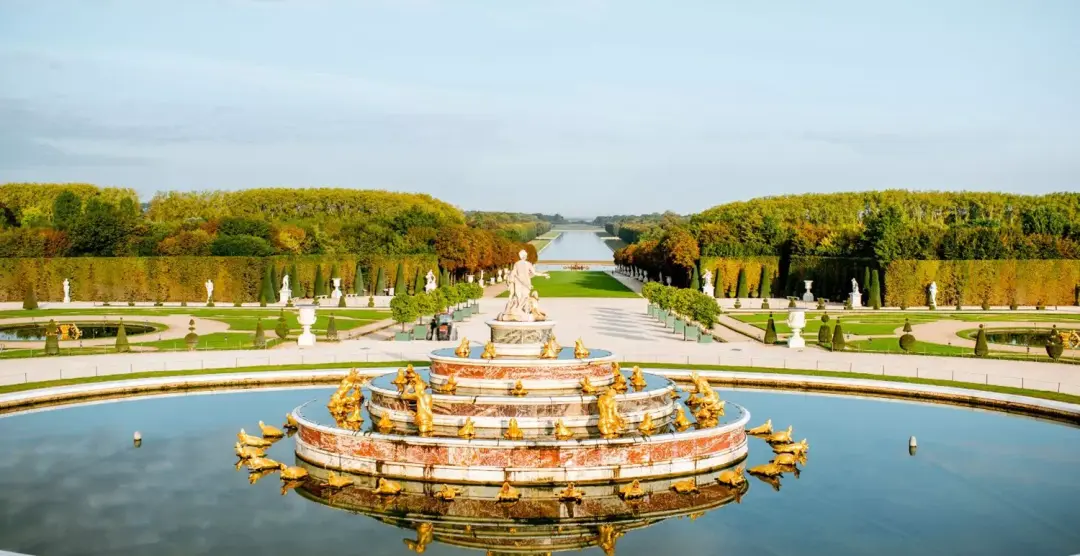
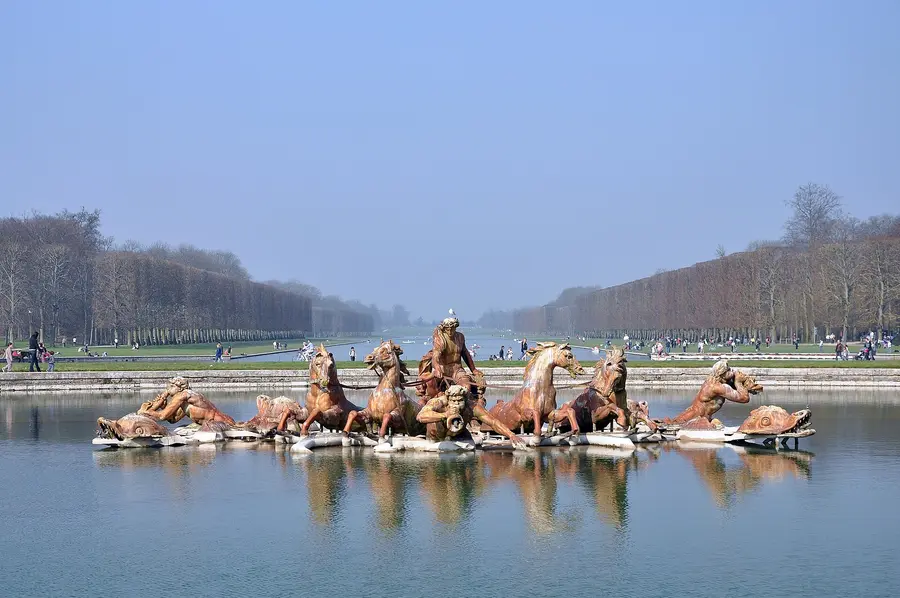
11. The Apollo Fountain
At the end of the Tapis Vert, Apollo, god of the Sun, bursts out of the water on a chariot pulled by four horses. Around him, Tritons blow conch shells to announce his arrival.
Installed in 1671, the gilded sculpture shows the sun rising, just like the king starting his day. Behind it, the Grand Canal stretches for more than a mile.
Kid challenge: count the horses, then the Tritons. Which way is the chariot heading, and why do you think it's rushing toward the palace?
Fun fact: Louis XIV had real gondolas on the Grand Canal, a gift from Venice, gondoliers included. The buildings where they lived, by the canal, are still called Little Venice.
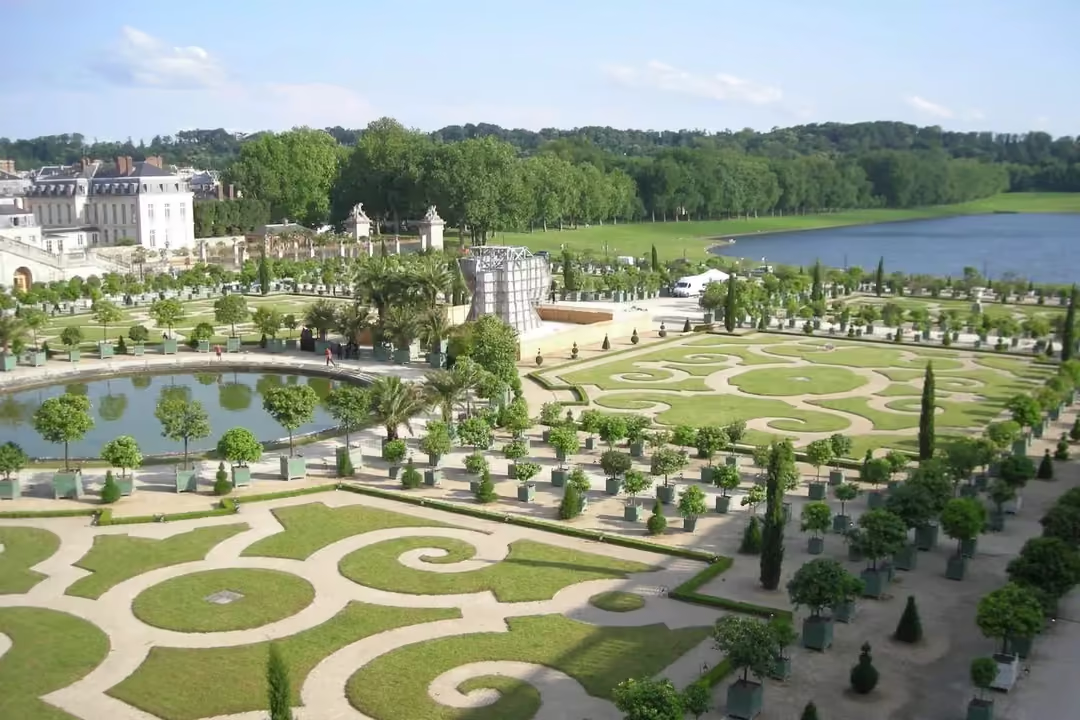
12. The Orangery
Below the terrace, south of the palace, the Orangery shelters about 1,500 trees in wooden planters over the winter: orange and lemon trees, pomegranates, and palms. It has no heating at all. Very thick walls and tall south-facing windows are enough to keep the frost away. From May to October, the trees go back outside around the pools.
Kid challenge: from May to October, count the trees in just one row from the balustrade above. In any season, guess how they moved such heavy planters every spring. (On sturdy carts, with a lot of muscle!)
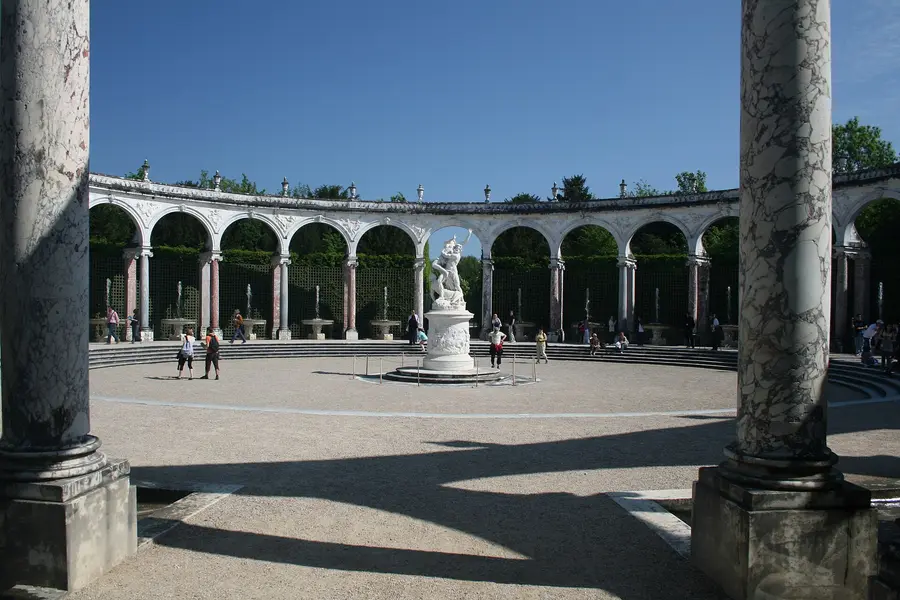
13. The Colonnade Grove
Hidden between the paths, the groves are secret outdoor rooms, each with its own decor and fountains. The most spectacular is the Colonnade: a circle of 32 marble columns and 32 arches, with jets of water bubbling beneath them. In the center, a statue shows Pluto, god of the Underworld, carrying off Proserpina. Good to know: the groves are only open on Musical Fountains and Musical Gardens days, from April to October.
Kid challenge: walk around the Colonnade counting the columns. Then look for the cherubs above the arches: what are they up to?
Marie Antoinette's Estate
14. The Petit Trianon
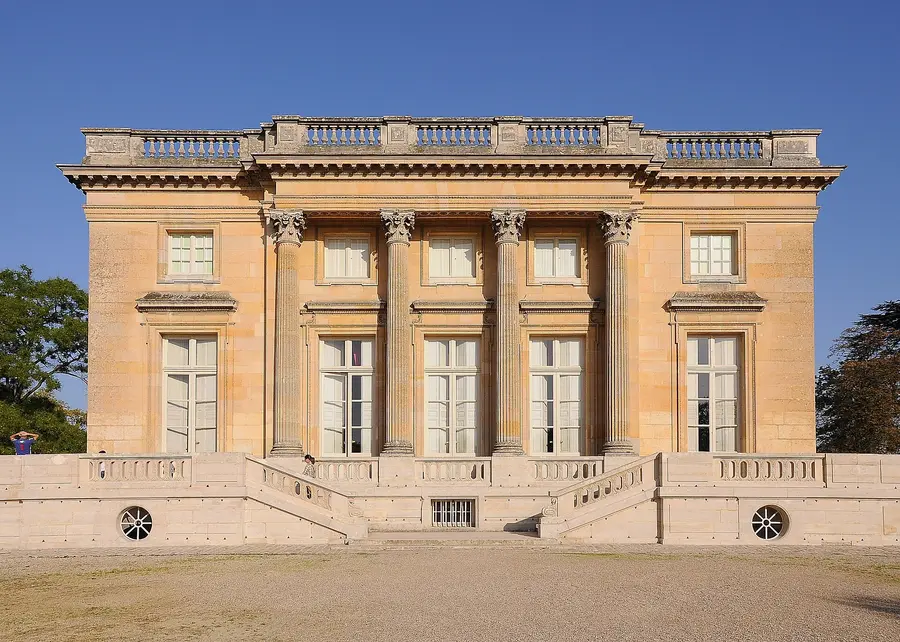
At the far end of the park, away from the crowds of the court, Louis XV built this small square château in the 1760s. In 1774, Louis XVI gave it to Marie Antoinette. Here, the queen lived as she pleased, with her friends, free from court etiquette. Her initials, an M and an A intertwined, decorate the banister. Upstairs, a small room hides a surprise: mirrors that rise from the floor to cover the windows.
Kid challenge: find the queen's initials in the banister. Then guess: why would anyone want mirrors that slide up over the windows?
15. The Queen's Hamlet
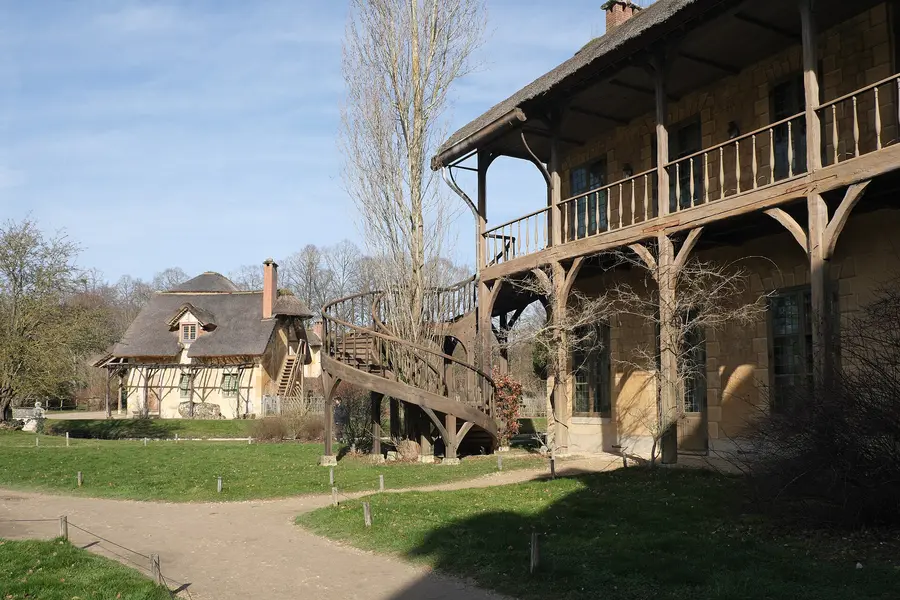
Even farther away, Marie Antoinette had a real little country village built around a lake: about a dozen buildings, including her own house, a mill, a dairy, a dovecote, a tower, and a farm. From the outside, the houses look like thatched cottages. Inside, the queen's house was beautifully furnished. The farm was real, though, and supplied her with milk and eggs. You can still meet farm animals there today.
Kid challenge: make a checklist (mill, farm, dovecote, vegetable garden) and check items off as you spot them. Then count the farm animals.
A Game for the Whole Day: Hunt for the Sun
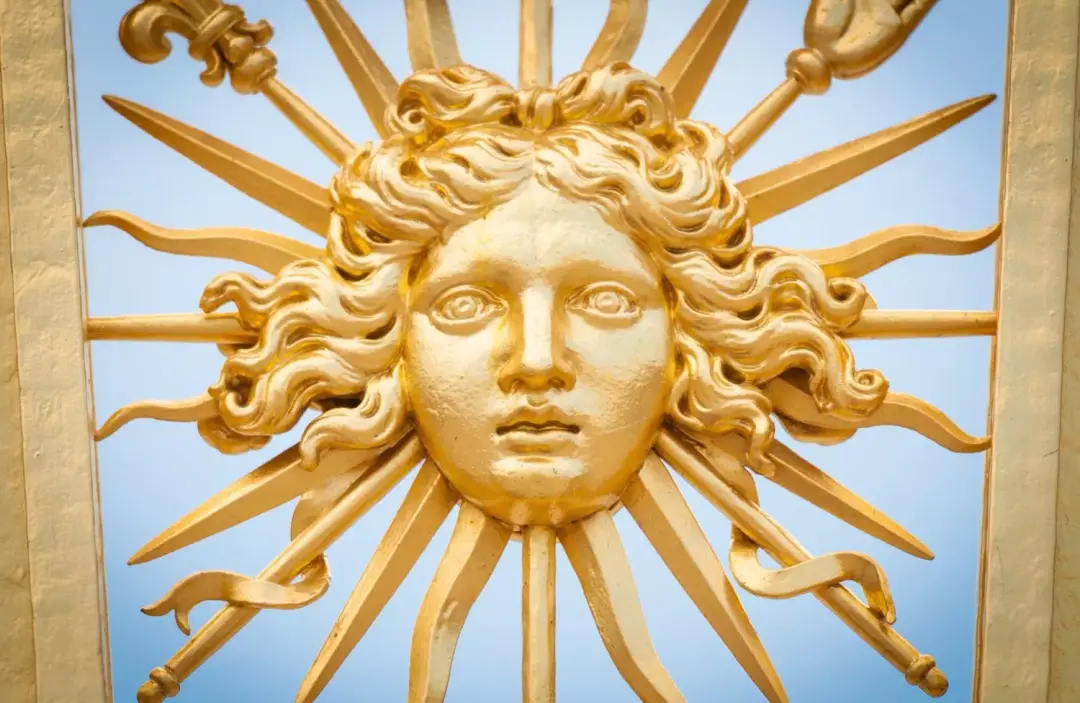
Louis XIV chose the sun as his emblem: a face surrounded by rays, the face of Apollo. You'll find it everywhere at Versailles: on the entrance gate, the balconies, the doors, the ceilings, and even in the gardens. Ask the kids to count every sun they see during the day. Whoever spots the most suns wins.
A Day at Versailles with Kids: Sample Plan
- 9 a.m.: arrive at opening for your time slot. Marble Courtyard, Royal Chapel, State Apartments, Hall of Mirrors, and the King's and Queen's Bedrooms.
- Noon: lunch break. There are cafés on site, and picnics are allowed in the park, but not in the formal gardens.
- Early afternoon: Water Parterre, Latona and Apollo Fountains, then the little train to the Trianon Estate.
- Late afternoon: Petit Trianon and the Queen's Hamlet, ending with the farm animals.
A full day is a lot for little ones. Under 6? Stick to the palace and one corner of the gardens, and leave them wanting more.
Good to Know
- The palace is open Tuesday to Sunday and closed on Mondays. The Trianon Estate opens at noon.
- A timed entry slot is required for the palace, even with free admission.
- Palace and Trianon are free for kids under 18, and for European residents under 26 (this doesn't apply to U.S. visitors).
- Gardens are free from November to March. From April to October, they charge admission on Musical Fountains and Musical Gardens days, the only days the groves are open.
- Prices and hours were checked in November 2026. They can change, so check the official website before you go.
Book a Private Family Tour
Want a guide who knows how to keep kids hooked? On our private Treasures of Versailles tour, kids solve riddles about the myths on the ceilings and discover life at the Sun King’s court, from the State Apartments to the Hall of Mirrors. It lasts 90 to 105 minutes, it’s in English, and it’s just for your family. Best for ages 6 to 11.
From €520 for a private group of up to 10, plus admission for adults (kids under 18 go free).
Loved the gods and heroes you met at Versailles? Our Mythology in the Tuileries tour hunts for them in the heart of Paris. Heading to the Louvre too? Read our Louvre with kids guide.