

We're Paris Antoinette, and we guide families and school groups up the hill every week. Montmartre was a village of windmills and vineyards before it became the playground of Picasso and Renoir. It's still full of stories kids love. Here's how to make the most of it.
Before You Go: 5 Tips for Montmartre with Kids
- Expect stairs. Montmartre is a hill, with steep streets, cobblestones, and lots of steps. The route below is about a mile and a quarter (2 km). Strollers are hard work here, so a baby carrier is easier.
- Start at Abbesses and walk uphill. Then finish at Sacré-Cœur, with the best view of Paris as your reward.
- Use the funicular for tired legs. The little funicular railway runs up the slope below Sacré-Cœur. A Métro-Train-RER ticket or a Navigo pass covers it, but you'll need a fresh ticket even if you just came off the metro.
- Come in the morning. Place du Tertre and the steps of Sacré-Cœur get very crowded in the afternoon.
- Watch out for street scams. Near Sacré-Cœur, politely say no to anyone offering a free "friendship bracelet." It always ends with a request for money.
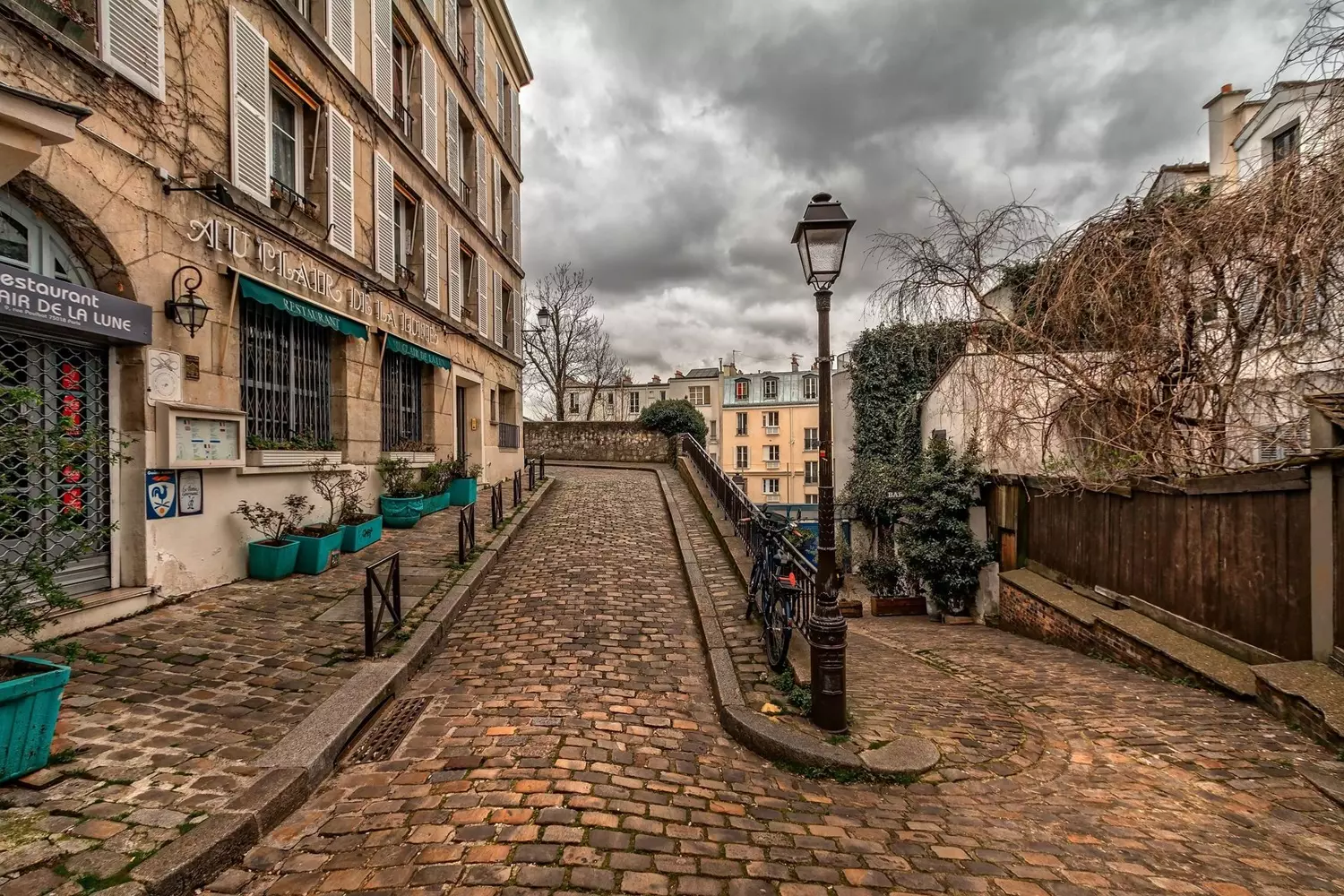
Around Abbesses: Love, Movies, and Picasso
1. The Abbesses Metro Entrance
Your visit starts underground. The platforms at Abbesses are 118 feet (36 meters) down, among the deepest in Paris, so take the elevator. Up top, the entrance is one of only two original glass-roofed entrances by Hector Guimard left in Paris. It was moved here from Hôtel de Ville in 1974. Its green iron stems look like plants growing out of the sidewalk.
Kid challenge: look at the green ironwork. Does it look like flowers, plants, or insects? Guimard wanted his metro entrances to feel like they had grown there.
2. The Wall of Love
In a small garden next to Place des Abbesses, a wall of 612 blue tiles says "I love you" 311 times, in 250 languages. Artists Frédéric Baron and Claire Kito created it in 2000. Look for the red splashes too. They're pieces of a broken heart.
Kid challenge: find "I love you" in English, then in French ("je t'aime"). Can you find a language written in a different alphabet?
3. Amélie's Grocery Store
On rue des Trois-Frères, a little corner grocery store with crates of fruit outside is famous around the world. It appears in Amélie, a French movie set in Montmartre that made the neighborhood even more popular.
Kid challenge: count the different fruits and vegetables on display. Which one would you pick for a snack?
4. The Bateau-Lavoir
Place Émile-Goudeau, a small sloping square, is where many say modern art was born. The Bateau-Lavoir was a ramshackle building full of artists' studios. Young Picasso lived and worked here, and in 1907 he created Les Demoiselles d'Avignon, one of the most famous paintings of the 20th century. The building burned down in 1970 and was rebuilt in 1978.
Kid challenge: Bateau-Lavoir means "laundry boat." Why would anyone call a building that? Make your best guess before your parents give the answer (the poet Max Jacob thought it looked like the floating laundries moored on the Seine, and it creaked like one).
We stop here on our Montmartre Adventures tour.
Up the Hill: Windmills, Walls, and Legends
5. The Moulin de la Galette
Montmartre once had about 30 windmills, which ground grain. Only two remain, the Blute-Fin and the Radet. In the 1800s, a dance hall next to them, the Moulin de la Galette, drew crowds on Sunday afternoons. In 1876, Renoir captured it in one of his best-known canvases, now at the Musée d'Orsay.
Kid challenge: count the windmill's sails. Then imagine the hill covered with 30 of them, turning in the wind.
See Renoir's painting in our Musée d'Orsay with Kids guide.
6. The Man Who Walked Through Walls
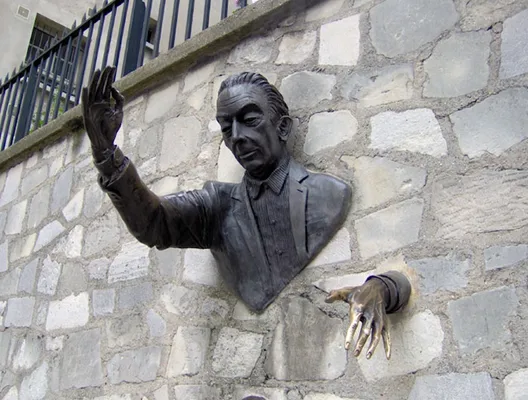
On Place Marcel-Aymé, a bronze man is stuck halfway through a stone wall. He's the hero of a short story by the French writer Marcel Aymé, about a quiet office clerk who discovers he can walk through walls, until one day he gets stuck. The actor Jean Marais, who was also a sculptor, made the statue.
Kid challenge: shake his hand (it's sticking out of the wall, and it's shiny from all the visitors who do the same). Then imagine: if you could walk through walls, where would you go first?
We tell his whole story on our Montmartre Adventures tour.
7. Dalida's Square
A small square is named after Dalida, one of France's most famous singers, who lived in Montmartre. A bronze bust of her, installed in 1997, looks out over the street, and fans still come to pay tribute. Her house is a few minutes away, on rue d'Orchampt.
Kid challenge: ask your parents if they know a Dalida song. Then ask them to hum it!
8. Saint Denis, the Man Who Carried His Own Head
Right next to Dalida's square, in Square Suzanne-Buisson, a statue tells a gruesome legend. Around the year 250, Denis, the first bishop of Paris, was beheaded on the hill. According to the legend, he picked up his head and walked away with it. One legend links Montmartre's name to this story: Mons Martyrum, the "mount of martyrs." Others say the name comes from a Roman temple to the god Mercury or Mars.
Kid challenge: find the statue of Saint Denis. What's he holding? Kids never forget this one.
This legend is a favorite on our Montmartre Adventures tour.
9. La Maison Rose
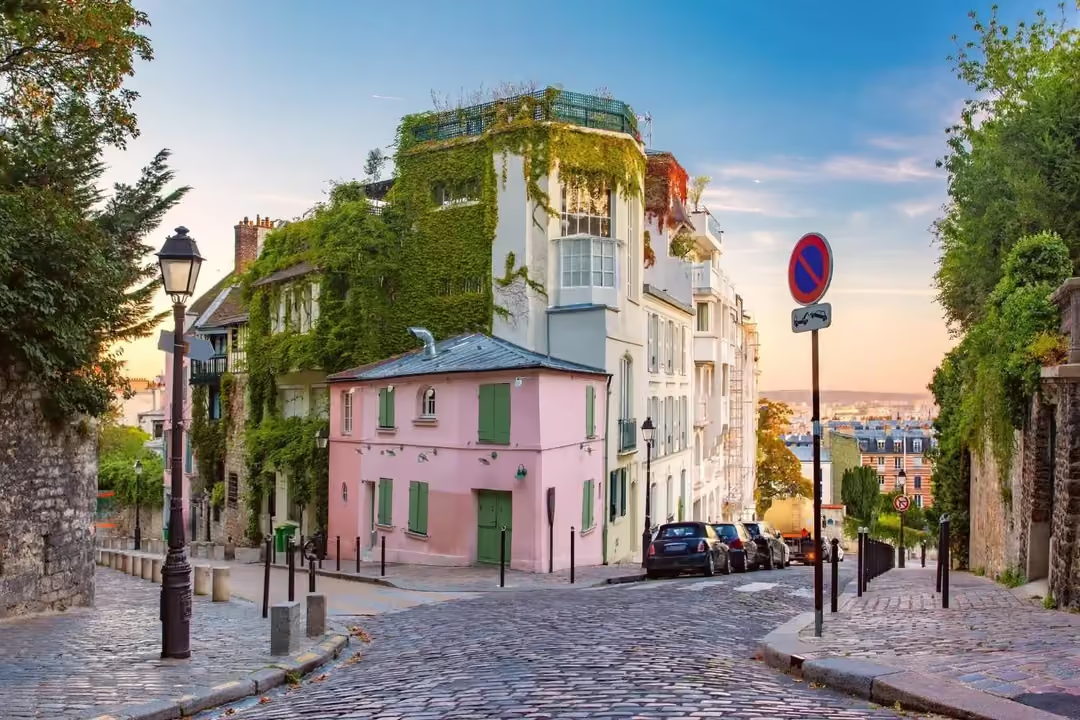
This small pink house with green shutters, on a cobbled corner, is one of the most photographed spots in Paris. The painter Maurice Utrillo, who grew up in Montmartre, painted it, and today it's a restaurant.
Kid challenge: if you painted this house, which colors would you need? Count the green shutters.
10. The Montmartre Vineyard
Yes, there's a vineyard in Paris! The Clos Montmartre was planted in 1933, a reminder of the days when the hill was covered with vines. Every October, the neighborhood celebrates the grape harvest with a big festival.
Kid challenge: look through the fence and count the rows of vines. Can you spot any grapes? (In late summer, you might.)
11. The Lapin Agile
This little pink cabaret, with its green shutters, has been a hangout for artists for more than a century, Picasso among them. Its name comes from a sign painted by the artist André Gill, showing a rabbit jumping out of a cooking pot. People called it the "Lapin à Gill," Gill's rabbit, which became "Lapin Agile," the nimble rabbit.
Kid challenge: find the rabbit on the sign. Why do you think he's in such a hurry to get out of the pot?
The Top of the Hill: Painters, Cats, and the White Basilica
12. Place du Tertre
The heart of the old village is now an open-air studio. Painters set up their easels in the square, and portrait artists offer to draw visitors. It's busy and fun, especially in the morning, before the crowds.
Kid challenge: watch a painter at work for one minute. What are they painting? Which colors are they using the most?
13. The Street Art of Montmartre
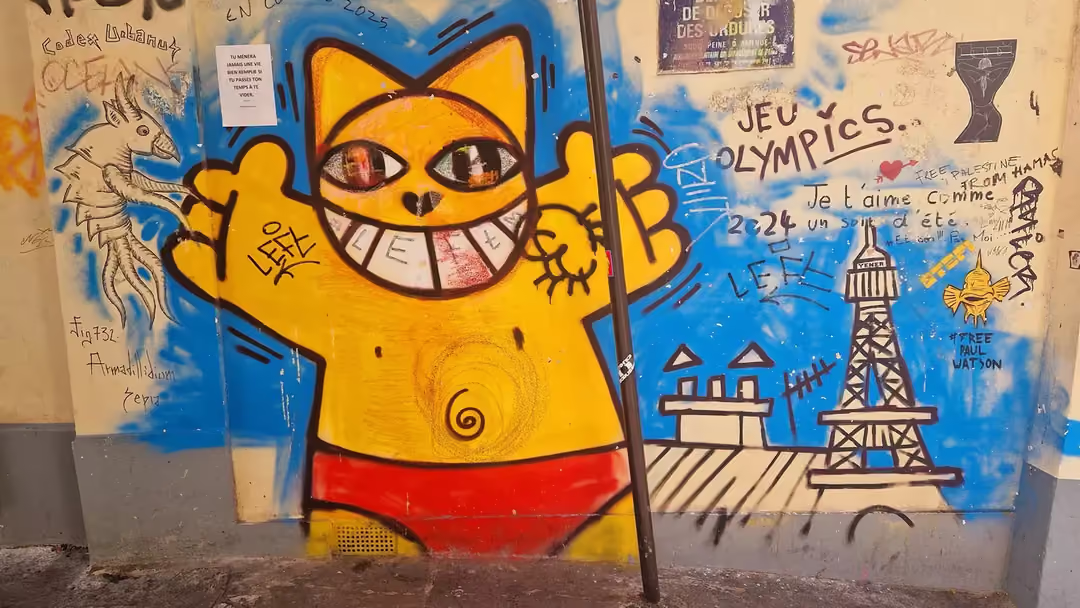
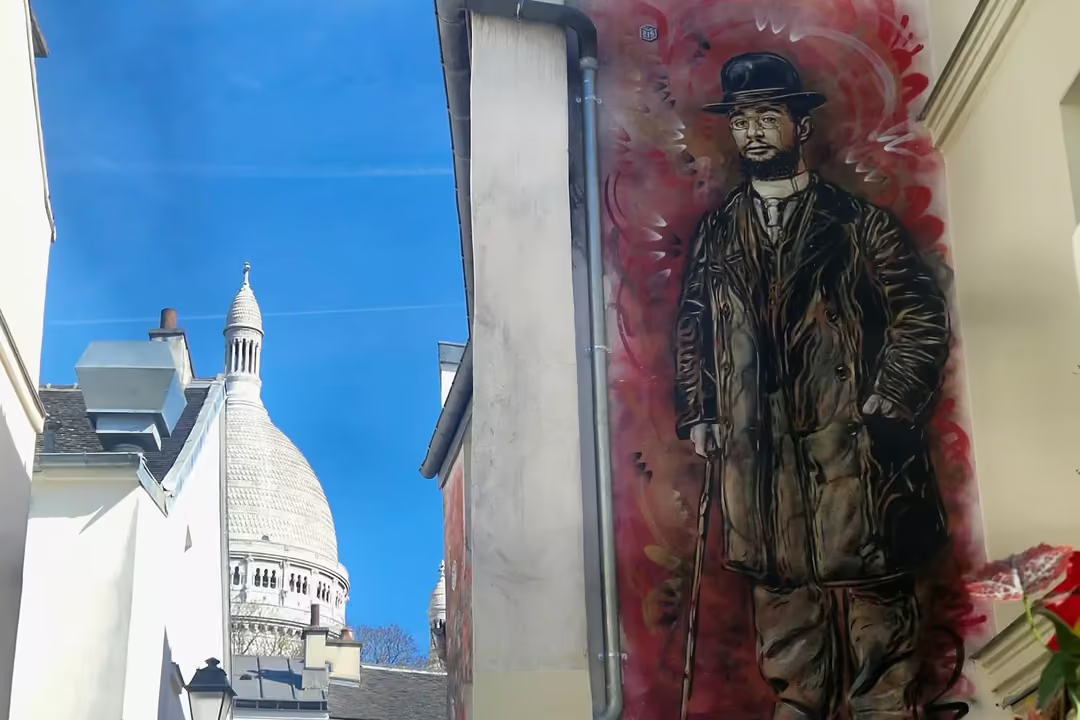
Montmartre's artists aren't only in museums. Look up at the walls. A big smiling yellow cat, painted by the artist Thoma Vuille, known as Monsieur Chat, pops up around Paris. Near Place du Tertre, the street artist C215 painted portraits of Toulouse-Lautrec, the painter of Montmartre's cabarets, in his bowler hat.
Kid challenge: who can spot the most pieces of street art between Place du Tertre and Sacré-Cœur? A smiling cat counts double.
Love street art? Try our Belleville Street Art Hunt.
14. Sacré-Cœur and the View
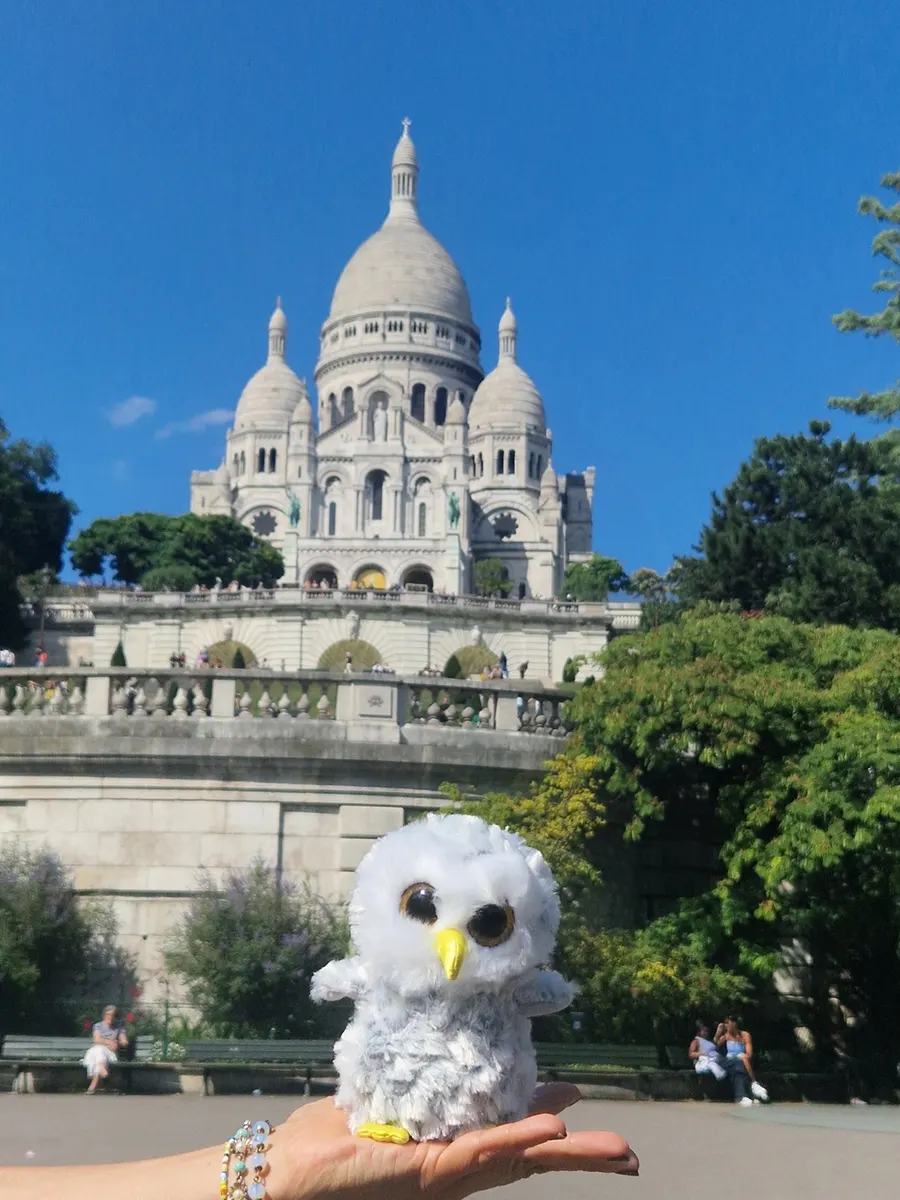
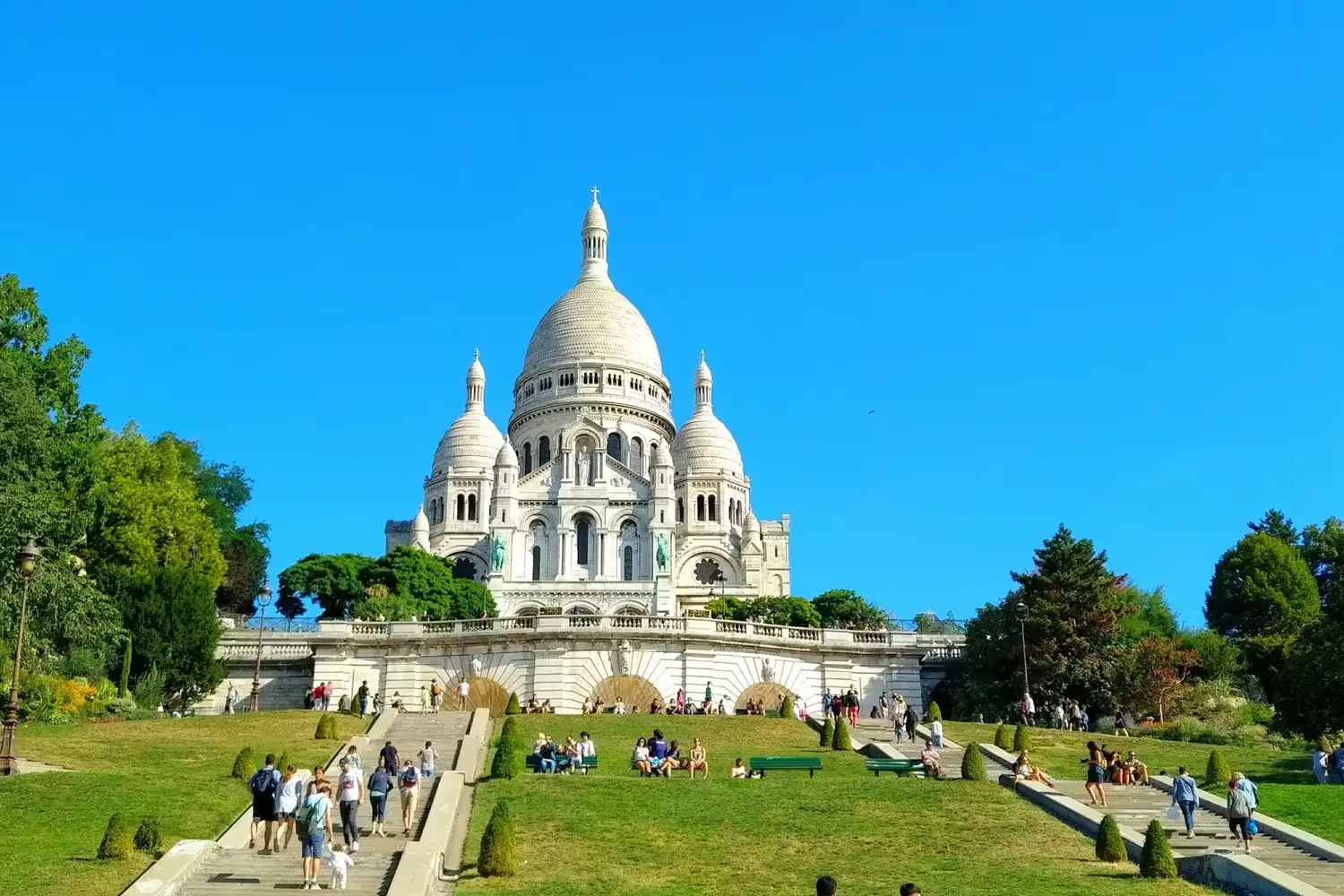
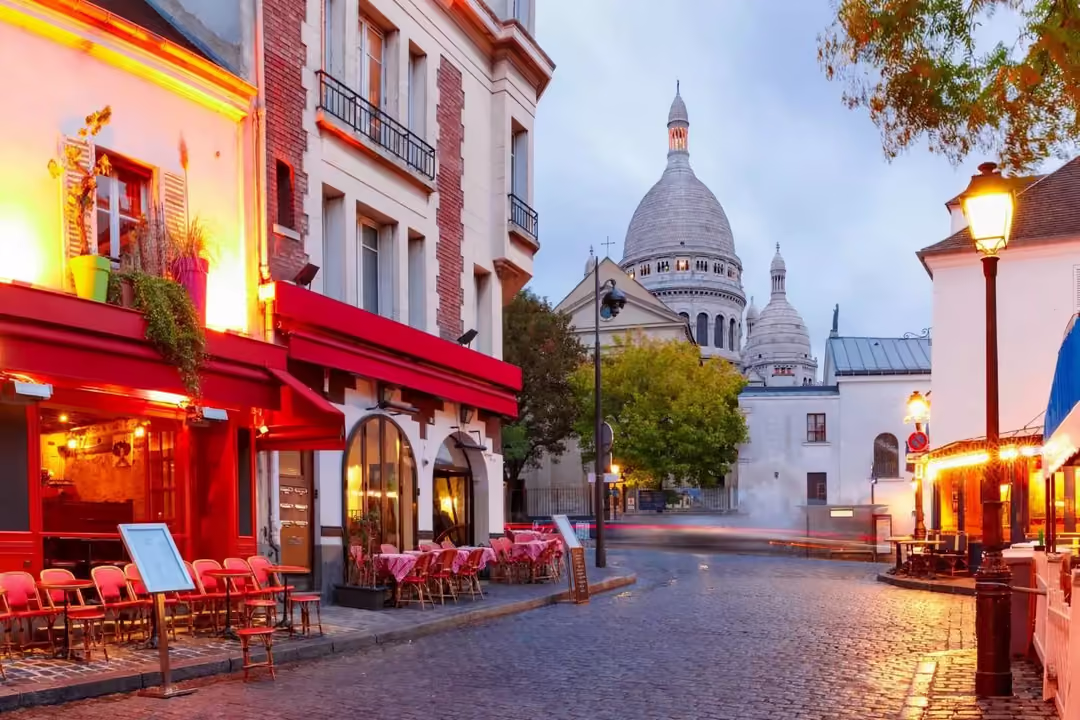
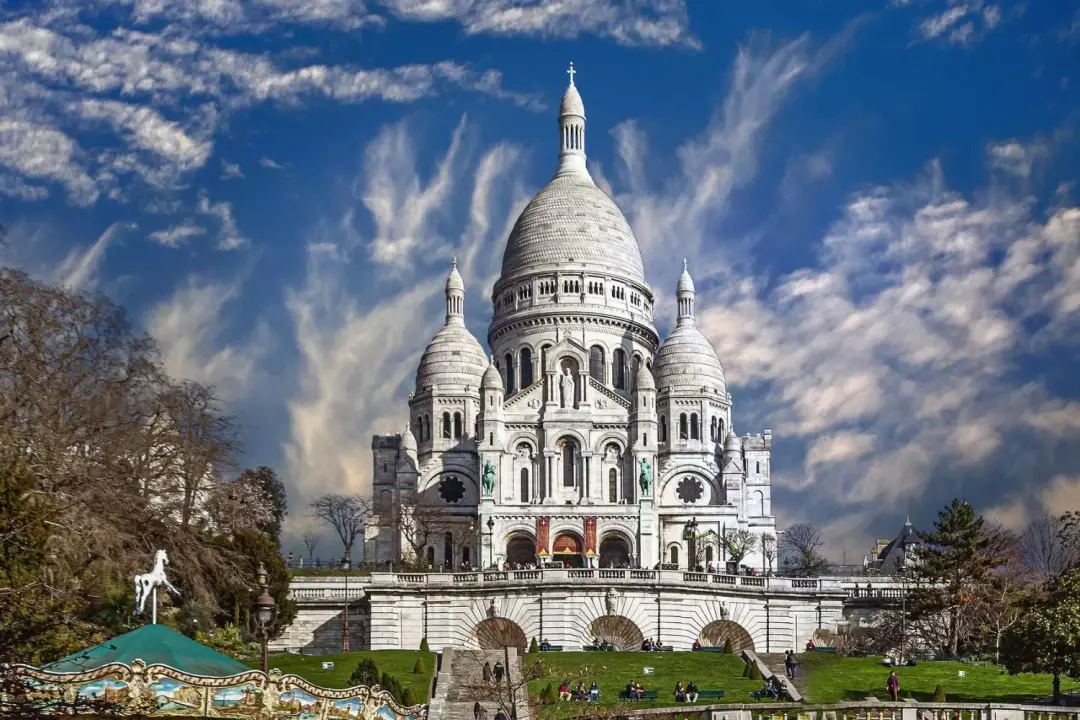
Built between 1875 and 1914 and consecrated in 1919, the Sacré-Cœur Basilica crowns the hill. Its stone gets whiter when it rains, which is why it always looks so bright. From the steps, all of Paris spreads out below you. If your kids still have energy, you can climb about 300 steps to the top of the dome, for an even bigger view.
Kid challenge: from the steps, find three Paris landmarks you recognize. Can you spot the Eiffel Tower? (Hint: it's not straight ahead.)
Want an Expert to Bring It All to Life?
On our private Montmartre Adventures tour, kids meet the saint who carried his head, the man stuck in the wall, and Picasso's famous studio, with riddles along the way. We end in front of Sacré-Cœur. Tours last 90 to 105 minutes, they're in English, and they're just for your family. Best for ages 6 to 11.
Starting at €420 for a private group of up to 10 people.
Heading to the Palais Garnier too? It's a short metro ride away. Read our Paris Opera with Kids guide.